
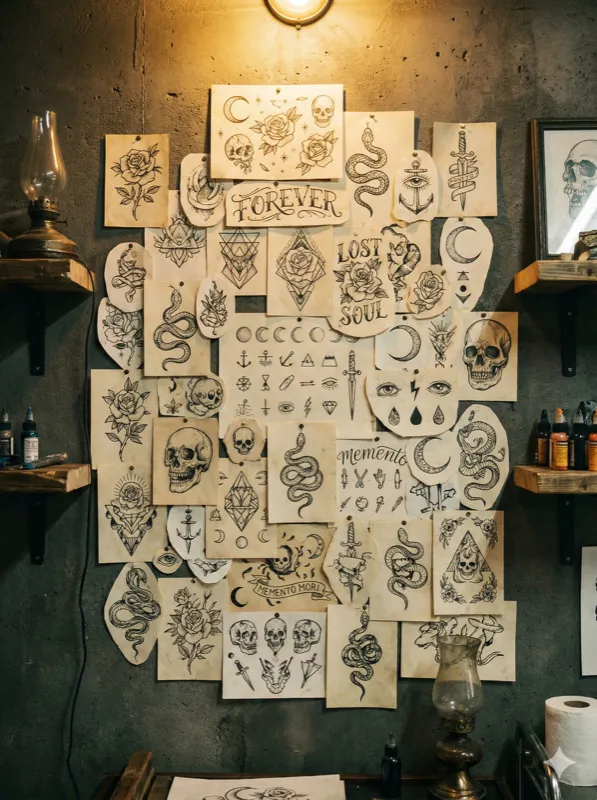
Neo-traditional tattoos are having a moment — and it's not hard to see why. They take everything that made American traditional tattoos iconic (bold outlines, strong contrast, timeless appeal) and push it further: richer color palettes, more detailed shading, broader subject matter, and a distinctly contemporary illustration sensibility. The result is tattoo art that feels both rooted in tradition and completely fresh.
If you're drawn to this style — or curious whether it's right for you — this guide breaks down everything: what defines neo-traditional, its most popular motifs, how to choose an artist, where these tattoos look best, and how to design one that's truly yours.
What Is Neo-Traditional Tattooing?
Neo-traditional is a direct evolution of American traditional tattooing. Where classic traditional (often called "old school") is defined by flat color fills, a restricted palette (red, green, yellow, black), and simplified iconic imagery, neo-traditional takes those structural principles and expands them dramatically.
The defining characteristics of neo-traditional tattoos:
- Bold, confident outlines — the strong black outline is inherited from traditional, but neo-trad uses variable line weight for depth and dimension
- Expanded color palettes — deep jewel tones (emerald, cobalt, burgundy, violet), complex gradients, and metallic shades are all fair game
- Illustrative detail — more fine detail than traditional, but not photorealistic; the style sits confidently between flat design and realism
- Dimensional shading — layered color transitions create a sense of depth without crossing into realism
- Eclectic subject matter — anything goes, from animals to portraits to pop culture references to mythology
How neo-traditional differs from adjacent styles:
| Style | Outlines | Color | Shading | Subject Matter |
|---|---|---|---|---|
| American Traditional | Heavy, uniform | Flat, limited palette | Minimal | Classic icons (eagles, anchors, roses) |
| Neo-Traditional | Bold, variable weight | Rich, expanded palette | Dimensional, layered | Broad — almost anything |
| New School | Exaggerated, cartoonish | Hyper-bright, fluorescent | Gradient-heavy | Cartoon/graffiti-influenced |
| Illustrative | Varies widely | Varies | Sketch-like | Broad |
The key insight: neo-traditional is defined by craft — the quality of linework, the control of color, the sense of visual weight and composition. It rewards skilled artists more than almost any other style.
A Brief History: Where Neo-Traditional Comes From
American traditional tattooing dominated the Western tattoo world for much of the 20th century. Its conventions — the bold lines, limited palette, iconic subjects — were practical as much as aesthetic. Early tattoo equipment and inks had limitations; the traditional style worked within those constraints and created art that held up over decades.
By the 1980s and 1990s, tattoo artists began pushing against those constraints. Inspired by fine art, illustration, and graphic design, they started introducing more complex imagery, richer color, and more sophisticated shading while keeping the structural integrity of the traditional outline-based approach. Neo-traditional emerged as a natural outgrowth of this artistic ambition.
Today, neo-traditional sits at the intersection of tattoo tradition and contemporary illustration culture. It's favored by artists who have fine art or illustration backgrounds alongside technical tattoo training — and it shows in the work.
Popular Neo-Traditional Motifs and Subjects
One of neo-traditional's strengths is its versatility. Almost any subject translates well to the style. But certain motifs have become particularly iconic:
Animals
Animals are the heartland of neo-traditional tattooing. The style's combination of bold outlines and rich color creates striking animal portraits and character designs.
Most popular:
- Wolves — solitary, powerful, often combined with forest or moon imagery
- Foxes — clever, mysterious, frequently depicted with ornate floral framing
- Owls — wisdom symbolism + detailed feather texture = neo-trad perfection
- Lions — regal and majestic, often done as large-scale centerpieces
- Bears — strength and resilience, popular for arm and thigh pieces
- Cats — both mystical (black cats, Egyptian cats) and playful interpretations
- Snakes — transformation, danger, and temptation; pairs beautifully with floral elements
- Eagles and ravens — freedom and mystery respectively, both with strong line potential
Florals
Flowers are a near-universal element in neo-traditional work, both as primary subjects and supporting design elements.
- Roses — the gold standard; their layered petals showcase the style's dimensional shading beautifully
- Peonies — lush, full, with complex petal structures perfect for detailed rendering
- Dahlias and chrysanthemums — geometric structure meets organic form
- Wildflowers — lavender, thistle, and forget-me-nots add delicacy and movement
Portraits and Figures
Neo-traditional handles human and mythological figures with distinctive illustrative flair — not photorealistic, but expressive and character-driven.
- Femme fatale figures — a classic from the traditional canon, updated with more complex rendering
- Witches and magical figures — mysterious, occult aesthetics work beautifully in this style
- Deities and mythological figures — Greek gods, Norse mythology, Japanese demons reimagined with neo-trad sensibility
- Sugar skull / Día de los Muertos — highly decorative, naturally suited to the style
Symbols and Objects
- Daggers and swords — especially paired with florals (the classic "dagger through rose" motif updated)
- Gems and crystals — highly decorative, showcases the style's color capabilities
- Eyes and masks — mystical symbolism with strong graphic appeal
- Hourglasses — time and mortality themes, often combined with other elements
- Nautical elements — ships, lighthouses, compasses — the neo-trad take on sailor tattoo tradition
Color in Neo-Traditional Tattooing
Color is where neo-traditional really distinguishes itself from its predecessor. Where American traditional uses a classic, limited palette, neo-traditional embraces almost infinite color complexity.
Signature neo-traditional color palettes:
- Jewel tones: Deep emerald, sapphire, amethyst, ruby — rich and saturated
- Earth-meets-jewel: Ochres, terracottas, and burnt oranges alongside deep teals and purples
- Cool moody: Navy blues, slate grays, muted purples with teal accents
- Warm illustrative: Golden yellows, rich reds, and warm oranges for animal-focused work
- Dark and gothic: Black, deep burgundy, forest green, midnight blue
What skilled neo-traditional artists do with color:
- Layer multiple tones within a single petal or feather
- Use background color to push foreground elements forward
- Employ selective highlights (often white or pale yellow) for depth
- Maintain warm/cool contrast for visual interest
The color work in neo-traditional tattoos is demanding. It requires an artist who understands color theory and has exceptional ink-mixing and application technique. When you're evaluating artists, their color work is the first thing to scrutinize.
Placement Guide: Where Neo-Traditional Tattoos Work Best
The style's combination of bold outlines and detailed interior work means neo-traditional generally needs more space than, say, fine line work — but is more forgiving than photorealistic realism.
Best Placements
Upper arm / shoulder — The classic location. A bicep or shoulder piece with a 4–6 inch portrait or animal motif sits perfectly here. Muscles provide a natural frame for the design, and the area ages well.
Forearm — Highly visible and a natural showcase. Works for both standalone pieces and as part of a sleeve. The inner forearm is particularly popular for florals and detailed work.
Thigh — One of the best canvases in the body. Large, flat, relatively consistent skin texture, low aging impact. Large neo-trad pieces on the thigh are increasingly popular in 2026.
Calf — Similar advantages to the thigh; good for tall vertical designs. Works well for animal portraits and full illustrative scenes.
Back — The ultimate canvas for large neo-trad compositions. A full back piece in this style is a serious investment but creates striking results.
Chest — Good for symmetrical designs or single bold centerpieces.
Placements to Approach Carefully
Hands and fingers — High fade risk; neo-trad's detail and color will degrade faster here. Discuss longevity honestly with your artist.
Ribs — High pain but doable; the flat surface works well, but skin movement can complicate healing.
Feet — Color retention is a known challenge; consult your artist.
Neck and face — Career and social implications aside, the skin texture and movement require very experienced artists.
Finding the Right Neo-Traditional Artist
This is arguably the most important decision in your neo-traditional tattoo journey. The style requires a specific combination of technical skills that not every tattoo artist has.
What to Look for in a Portfolio
1. Line quality — Neo-traditional lives and dies by its linework. Look for consistent, confident lines. No wobble, no inconsistent weight where consistency is needed, clean starts and ends.
2. Color saturation and blending — Are colors rich and vibrant? Does the blending look smooth and intentional? Are highlights and shadows working to create depth?
3. Composition — Do the pieces feel balanced and complete? Is there a clear focal point? Do decorative elements support the main subject without overwhelming it?
4. Healed work — New tattoos always look better than healed ones. Ask if the artist has photos of healed work. A good artist's portfolio should include both.
5. Subject matter range — If you want a specific animal or motif, look for evidence they've done similar work. Different subjects have different technical demands.
Red Flags
- Muddy colors that have blended together unintentionally
- Wobbly or inconsistent outlines
- Flat, lifeless color with no dimensional quality
- No healed work in the portfolio
- Pressure to choose from pre-drawn designs without customization
The Consultation
Book a consultation before committing. Bring reference images — not to copy, but to communicate the mood, color palette, and style direction you're after. A skilled neo-traditional artist will take your references and translate them into something original.
Questions to ask:
- What size do you recommend for this design and placement?
- How long will the session take, and will it require multiple sessions?
- What aftercare do you recommend for color preservation?
- Do you have healed examples of similar work?
Using AI to Design Your Neo-Traditional Tattoo
Before you book an artist, it's worth exploring what you want. This is where AI tattoo generators can be genuinely useful — not to replace the artist, but to help you visualize options, explore style variations, and arrive at your consultation with a clearer vision.
How to use AI effectively for neo-traditional design:
- Explore motif combinations — Want a wolf with roses? A fox with geometric elements? AI can quickly generate visual concepts that help you choose
- Test color palettes — Seeing your motif in jewel tones vs. warm earth tones vs. dark gothic palette makes the abstract concrete
- Evaluate scale — AI-generated previews help you understand how a design might look at different sizes
- Build a reference library — Generate multiple variations, save what resonates, bring the collection to your artist
The AI-generated image won't be your final tattoo design — your artist will create something better, refined, and original. But it's an efficient way to discover and communicate your aesthetic direction.
Try generating your neo-traditional tattoo concept with our AI tool
Neo-Traditional vs. Related Styles: Making Your Choice
Unsure whether neo-traditional is exactly what you want? Here's a quick comparison to help you decide:
Choose neo-traditional if:
- You love bold, illustrative art with strong outlines
- You want rich, complex color that goes beyond the traditional palette
- You want detailed work that's more durable than fine line
- You're drawn to animals, florals, and mythology as subjects
- You want a tattoo that will look strong at any size from medium upward
Consider American traditional if:
- You prefer the flat, iconic, "classic tattoo" aesthetic
- You want the most time-tested, proven style for longevity
- Simplicity and boldness appeal more than detail and complexity
Consider new school if:
- You want a more exaggerated, cartoon-influenced, graphic look
- Bright neon and fluorescent colors appeal to you
- You're drawn to pop culture references and playful designs
Consider illustrative tattooing if:
- You want sketch-like quality and variation in linework
- You're open to a more experimental, fine-art-influenced result
How Long Does a Neo-Traditional Tattoo Take?
Session length varies significantly based on size and complexity:
| Size / Complexity | Estimated Time |
|---|---|
| Small simple piece (3–4 inches) | 2–3 hours |
| Medium piece with detail (5–7 inches) | 4–6 hours |
| Large detailed piece (8+ inches) | 6–10+ hours (often multiple sessions) |
| Half sleeve | 3–5 sessions |
| Full sleeve | 8–15+ sessions |
Color work takes longer than black and grey. Neo-traditional's layered color approach typically requires more time than simpler flat-fill work.
Aftercare for Neo-Traditional Tattoos
The rich color palettes of neo-traditional tattoos benefit from meticulous aftercare. Color fades faster than black ink, and the detailed interior work needs careful healing to preserve vibrancy.
First two weeks:
- Follow your artist's aftercare instructions exactly
- Keep the tattoo moisturized but not over-saturated
- Avoid sun exposure entirely during healing
- No swimming, soaking, or submerging in water
- No picking, scratching, or peeling flaking skin
Long-term color preservation:
- Apply broad-spectrum SPF 50+ sunscreen whenever the tattoo will be exposed to sun
- Moisturize regularly with fragrance-free lotion
- Stay hydrated — skin condition directly impacts ink quality
- Expect a touch-up session 6–8 weeks after the initial tattoo; this is normal, not a failure
Signs your tattoo is healing normally:
- Some peeling and flaking (like a sunburn) in week 2
- Slight milky appearance as the skin layers heal over — this will clear
- Itching (do not scratch)
Signs to contact your artist or a doctor:
- Persistent redness, swelling, or warmth beyond 3 days
- Oozing pus or unusual discharge
- Fever or systemic symptoms
What to Expect with Aging
Neo-traditional tattoos age better than most detailed styles, thanks to their bold outlines. The black outline framework holds the design together even as colors shift slightly over time.
What happens over time:
- Colors will soften slightly — the jewel tones will remain, but with a more settled quality
- Very fine interior detail may blur slightly after 10–15 years
- The bold outline structure maintains the design's integrity
To maximize longevity:
- Choose an experienced artist who applies ink at the right depth
- Follow sun protection diligently for the life of the tattoo
- Consider scheduled touch-ups every 5–7 years to refresh color saturation
Frequently Asked Questions
How much does a neo-traditional tattoo cost? Expect to pay premium rates — $150–$300+ per hour from experienced neo-traditional specialists. A quality medium-sized piece typically runs $500–$1,500+. This is not a style to bargain-shop for; the technical demands are high and the results reflect the investment.
Does neo-traditional hurt more than other styles? Pain is about placement, not style. The tattooing process is the same regardless of style. See our tattoo pain chart guide for placement-specific pain information.
Can neo-traditional work on darker skin tones? Yes, with the right artist. Some color choices work better on different skin tones. Experienced artists will adjust their palette accordingly — jewel tones and darker saturated colors often work particularly well on deeper skin tones.
How do I find a neo-traditional specialist near me? Instagram is the primary discovery platform for tattoo artists. Search hashtags like #neotraditional, #neotraditionaltattoo, #neotrad. Artist directories like Tattoodo and Inkstinct also let you filter by style and location.
Will my neo-traditional tattoo need touch-ups? Most tattoos benefit from a touch-up 6–8 weeks after the initial session once healing is complete. After that, well-cared-for neo-traditional work can go years without needing attention.
Can I mix neo-traditional with other styles? Yes — "neo-trad" is sometimes blended with illustrative, realism elements, or Japanese influences. Be clear with your artist about your aesthetic goals, and look at examples of mixed-style work they've done.
Neo-traditional tattooing represents one of the most compelling intersections of tattoo tradition and contemporary illustration craft. It demands exceptional skill from your artist and rewards that skill with tattoos that are bold, beautiful, and built to last.
The process starts with a clear vision. Whether you use AI to explore concepts, collect references from Instagram, or walk into a consultation with just a mood and a subject, the key is finding an artist whose work genuinely excites you — and trusting them to bring your vision to life.
Ready to start exploring? Generate your neo-traditional tattoo concept with AI and arrive at your next consultation with a head start.