
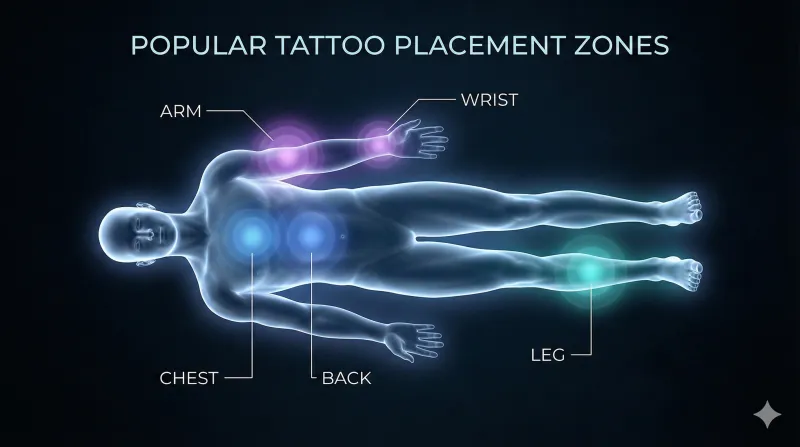
Placement is just as important as design when it comes to getting a tattoo. The right placement enhances the design, fits your lifestyle, and ages well over time. The wrong placement can distort a beautiful design or put it somewhere you'll regret.
This guide covers everything you need to know about choosing tattoo placement — body area characteristics, pain levels, sizing considerations, and style compatibility.
Arm Tattoos
The arm is the most popular tattoo placement for good reason — it's versatile, visible when you want it to be, and offers a natural canvas for almost any design.
Full Sleeve
- Canvas size: Large — allows complex, flowing compositions
- Pain level: Moderate (inner arm is more sensitive)
- Best styles: Japanese, tribal, blackwork, neo-traditional
- Aging: Ages well due to relatively stable skin
- Visibility: High — easily shown or covered with long sleeves
Half Sleeve (Upper or Lower)
- Canvas size: Medium-large
- Pain level: Moderate
- Best styles: All styles work well
- Aging: Good
- Visibility: Flexible — upper arm hidden by t-shirt, lower arm visible
Inner Forearm
- Canvas size: Medium
- Pain level: Low to moderate
- Best styles: Fine line, minimalist, script, geometric
- Aging: Good — skin stays relatively taut
- Visibility: Visible in short sleeves
Bicep
- Canvas size: Medium
- Pain level: Low to moderate
- Best styles: All styles, especially designs that wrap the muscle
- Aging: Good
- Visibility: Hidden by most short-sleeve shirts
Wrist & Hand Tattoos
Small, visible, and personal — wrist and hand tattoos make a subtle statement.
Inner Wrist
- Canvas size: Small
- Pain level: Moderate (thin skin, close to tendons)
- Best styles: Minimalist, fine line, small symbols, script
- Aging: Moderate — gets regular sun exposure and friction
- Visibility: Always visible unless wearing a watch or bracelet
Finger Tattoos
- Canvas size: Very small
- Pain level: High (thin skin, close to bone)
- Best styles: Minimalist symbols, bands, dots
- Aging: Poor — fades quickly due to constant use and washing
- Visibility: High
Hand Back
- Canvas size: Medium
- Pain level: High
- Best styles: Traditional, blackwork, ornamental
- Aging: Moderate — regular sun and friction exposure
- Visibility: Always visible
Back Tattoos
The back is the largest continuous canvas on the body, perfect for detailed, expansive compositions.
Full Back
- Canvas size: Extra large
- Pain level: Low to moderate (spine area is more painful)
- Best styles: Japanese, realism, blackwork, tribal
- Aging: Excellent — protected skin, stable area
- Visibility: Low — only visible shirtless
Upper Back / Shoulder Blades
- Canvas size: Medium-large
- Pain level: Low to moderate
- Best styles: All styles
- Aging: Good
- Visibility: Low — hidden by most clothing
Spine
- Canvas size: Narrow, vertical
- Pain level: High (directly over bone)
- Best styles: Script, geometric, minimalist, ornamental
- Aging: Good
- Visibility: Low
Chest Tattoos
Bold and personal — chest tattoos sit close to the heart, both literally and figuratively.
Full Chest Panel
- Canvas size: Large
- Pain level: Moderate to high (collarbone and sternum are painful)
- Best styles: Japanese, blackwork, neo-traditional, realism
- Aging: Good
- Visibility: Low — hidden by most clothing
Sternum / Under-Breast
- Canvas size: Medium
- Pain level: High (thin skin, close to bone)
- Best styles: Ornamental, geometric, fine line, mandala
- Aging: Good — protected area
- Visibility: Low
Leg Tattoos
Legs offer excellent canvas space and versatile visibility.
Thigh
- Canvas size: Large
- Pain level: Low (front and outer) to moderate (inner)
- Best styles: All styles — especially large compositions
- Aging: Good
- Visibility: Depends on clothing
Calf
- Canvas size: Medium-large
- Pain level: Moderate
- Best styles: All styles, especially designs that wrap the muscle
- Aging: Good
- Visibility: Depends on clothing
Shin
- Canvas size: Medium, vertical
- Pain level: High (thin skin, close to bone)
- Best styles: Blackwork, geometric, tribal
- Aging: Good
- Visibility: Depends on clothing
Neck & Behind Ear
Small but highly visible — these placements make a statement.
Behind the Ear
- Canvas size: Very small
- Pain level: Moderate to high
- Best styles: Minimalist, fine line, tiny symbols
- Aging: Moderate
- Visibility: Partially hidden by hair
Side of Neck
- Canvas size: Small to medium
- Pain level: High
- Best styles: Fine line, script, minimalist, blackwork
- Aging: Moderate — sun exposure
- Visibility: High
Nape (Back of Neck)
- Canvas size: Small to medium
- Pain level: Moderate
- Best styles: Geometric, ornamental, minimalist
- Aging: Moderate
- Visibility: Hidden by hair, visible with hair up
How to Choose the Right Placement
Consider these factors when deciding where to put your tattoo:
1. Design Size and Detail
Detailed designs need space. A realistic portrait needs at least a forearm-sized canvas. A minimalist symbol can go almost anywhere. Match your design's complexity to an area that gives it room to breathe.
2. Pain Tolerance
Areas with thin skin, little fat, or proximity to bone hurt more. If you're pain-sensitive or getting your first tattoo, start with lower-pain areas like the outer arm, thigh, or calf.
3. Visibility and Lifestyle
Consider your career and daily life. Some workplaces are tattoo-friendly; others aren't. Choose a placement that works with your lifestyle, whether that means always visible, easily hidden, or somewhere in between.
4. Aging and Longevity
Areas with more friction (hands, feet, fingers), frequent sun exposure (hands, forearms), or significant weight fluctuation (stomach, thighs) affect how tattoos age. More stable areas like upper arms, back, and chest tend to age best.
5. Body Contours
The best tattoo placements work with the body's natural curves. Flowing designs follow muscle lines. Circular designs sit well on rounded areas. Consider how the design will look when the body moves.
Preview Your Placement with AI
The best way to choose placement is to see it. Our tattoo simulator lets you upload a photo of any body area and preview exactly how a tattoo would look — matching your skin tone, body shape, and the natural contours of the placement.
Try different placements, sizes, and designs until you find the perfect combination. Start previewing →
Browse more tattoo ideas or explore tattoo styles to find your perfect match.