
Fine line tattoos have become one of the defining aesthetics of modern body art. Delicate, precise, and effortlessly sophisticated — they're the style that's taken over Instagram feeds, studio portfolios, and skin alike. Whether you're considering your first tattoo or adding to an existing collection, fine line work offers something no other style can match: maximum detail in minimum space.
This guide covers everything you need to know before booking your appointment — from choosing the right design to making your fine line tattoo last for decades.
What Is a Fine Line Tattoo?
A fine line tattoo uses ultra-thin needles (often a single 1RL needle) to create delicate, precise linework with minimal shading and maximum detail. Unlike traditional tattoos that rely on bold outlines and heavy fills, fine line work creates designs that feel almost drawn onto the skin.
The technique originated from single-needle tattooing but has evolved to encompass a wide range of styles — from botanical illustrations to micro-realism portraits, all unified by their characteristic lightness and precision.
Key characteristics of fine line tattoos:
- Ultra-thin lines (0.1–0.5mm range)
- Soft shading or no shading at all
- High detail in small to medium formats
- Delicate, artwork-quality aesthetic
- Typically done in black and grey or subtle color
Fine Line vs. Traditional Tattoo Styles
Understanding how fine line compares to other styles helps you decide whether it's right for you.
| Feature | Fine Line | Traditional | Blackwork | Watercolor |
|---|---|---|---|---|
| Line thickness | Ultra-thin | Bold, thick | Variable | Minimal/none |
| Shading | Soft or none | Heavy fills | Solid black areas | Color washes |
| Detail level | Very high | Moderate | Moderate–High | Low–Moderate |
| Longevity | Good (with care) | Excellent | Excellent | Moderate |
| Best size | Small–Medium | Any size | Any size | Medium–Large |
| Healing time | 2–4 weeks | 2–4 weeks | 2–4 weeks | 2–4 weeks |
| Artist skill req. | Very high | High | High | High |
| Pain level | Low–Moderate | Moderate | Moderate | Low–Moderate |
"Fine line tattooing requires precision that traditional styles simply don't demand. One trembling line, one miscalculated depth — and the entire piece changes." — Emily Chen, tattoo artist based in New York
The Most Popular Fine Line Tattoo Styles
1. Botanical & Floral
The most requested fine line category by far. Thin-line florals capture the natural complexity of petals, leaves, and stems with an almost scientific illustration quality. Popular choices include:
- Single stem roses — timeless, works on any placement
- Wildflower bouquets — birth flowers, meadow arrangements
- Olive branches — minimalist, versatile, meaningful
- Botanical anatomy — cross-sections, seed pods, pressed flower aesthetics
2. Script & Lettering
Fine line lettering creates handwriting-quality text that feels personal and intimate. 2026 is seeing a surge in:
- Micro lettering — tiny phrases on inner wrists, finger edges
- Custom handwriting — replicating a loved one's actual handwriting
- Single words — coordinates, dates, meaningful terms
- Calligraphic scripts — flowing serifs with hairline strokes
3. Micro-Realism
One of the most technically demanding fine line applications. Artists use layers of ultra-thin linework and subtle shading to create miniature, photorealistic images: tiny portraits, animal faces, still-life objects. Done well, these pieces are genuinely stunning — and a testament to the artist's skill.
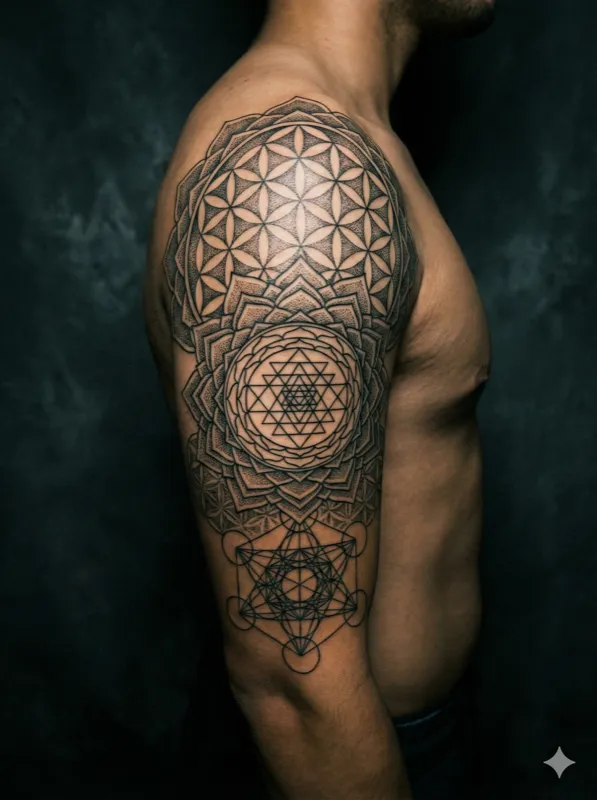
4. Geometric & Sacred Geometry
Thin-line geometric tattoos create architectural precision — mandalas, sacred geometry symbols, minimalist linework shapes. The absence of fills lets the negative space do the visual work.
5. Abstract & Single-Line Art
Inspired by minimalist illustration, single-line (or contour-line) tattoos trace a complete image in one unbroken stroke. Faces, animals, and figures emerge from elegant simplicity.
6. Ornamental & Lace
Intricate decorative patterns with a jewelry-like quality. Popular for collar bones, sternum, and upper chest placements. Think chandelier earring shapes, delicate filigree, and antique lace motifs.
7. Celestial & Astronomical
Constellations, sun and moon phases, planets, and star maps done in fine line have become modern classics. Their small scale and linear nature are a perfect match for the technique.
Fine Line Tattoo Design Ideas by Meaning
| Design | Common Meaning | Best Placement |
|---|---|---|
| Single stem rose | Love, balance, growth | Inner arm, collarbone |
| Birth flower | Family connection, birth month | Wrist, shoulder |
| Constellation | Guidance, astrology, identity | Ribcage, shoulder blade |
| Mountain range | Adventure, resilience | Forearm, upper arm |
| Wave or ocean | Freedom, emotion, change | Ankle, inner wrist |
| Moon phases | Time, cycles, femininity | Spine, ribcage |
| Olive branch | Peace, hope, strength | Wrist, neck |
| Compass | Direction, purpose | Forearm, chest |
| Script quote | Personal meaning, memory | Inner arm, collarbone |
| Animal portrait | Remembrance, identity | Upper arm, thigh |
Best Body Placements for Fine Line Tattoos
Placement matters more for fine line than almost any other style. The delicate nature of the linework means some areas hold it better than others.
Ideal Placements
Inner forearm and wrist — Low friction, minimal sun exposure, ages gracefully. The most popular placement for fine line work worldwide.
Collarbone and upper chest — Flat surface area showcases detail beautifully. Works especially well for botanical and ornamental designs.
Upper arm and shoulder — Enough surface area for larger fine line pieces. Relatively protected from daily wear.
Shoulder blade and upper back — Excellent for larger botanical or abstract designs. Skin stability is very good here.
Ribcage — Popular for meaningful text and delicate florals. Moderate pain level, but excellent for longevity.
Behind the ear — Tiny, discreet, modern. Best for very simple fine line symbols or micro text.
Placements to Approach With Caution
Hands and fingers — High friction areas. Fine line detail fades faster and requires more frequent touch-ups. Plan for maintenance.
Feet and ankles — Constant shoe contact causes faster fading. Feet also have variable skin thickness.
Inner elbow — Joint movement can distort linework over time. Possible but not ideal for very fine detail.
"The rule of thumb I give clients: the more that body part moves and rubs against things, the more often you'll need a touch-up on fine line work." — Marcus Rodriguez, Brooklyn-based fine line specialist
Choosing the Right Fine Line Tattoo Artist
Fine line work has a lower margin for error than almost any other style. Choosing the right artist is critical.
What to Look for in a Portfolio
- Consistent line weight — Lines should be uniformly thin and precise, not wobbly
- Clean, crisp edges — No blurring or unintended ink spread
- Healed photos — Any artist serious about fine line will show healed work alongside fresh
- Work in your specific style — Botanical specialists may not excel at micro-realism; verify their range
Red Flags to Avoid
- Portfolio shows only fresh, not healed work
- Heavy shading in an area where fine line detail should be
- Lines that show uneven pressure or wobble
- Artist unfamiliar with single-needle technique
- No examples of work at your desired scale
Questions to Ask Before Booking
- "Can I see healed examples of fine line work?"
- "What needle configuration do you use for this style?"
- "How do you handle depth for fine line vs. traditional work?"
- "What's your touch-up policy for fine line pieces?"
Using AI to Explore Design Options
Before committing, many people use AI tattoo generators to visualize their concept. Our AI tattoo generator lets you explore fine line designs in different styles, scales, and placements — giving you a visual reference to share with your artist and refine your vision before you book.
Fine Line Tattoo Cost Guide
| Tattoo Size | Session Time | Typical Cost Range |
|---|---|---|
| Micro (under 2 cm) | 30–60 min | $80–$150 |
| Small (2–5 cm) | 1–2 hours | $150–$300 |
| Medium (5–10 cm) | 2–4 hours | $300–$600 |
| Large (10–20 cm) | 4–8 hours | $600–$1,200+ |
| Full sleeve (fine line) | Multiple sessions | $2,000–$5,000+ |
Prices vary by artist reputation, location, and design complexity. Fine line artists often charge premium rates due to the technical difficulty of the style.
Tips for budgeting:
- Never choose an artist based on low price for fine line work
- Factor in touch-up costs (especially for high-wear placements)
- Ask about the artist's minimum charge — many fine line specialists have $150+ minimums
Fine Line Tattoo Aftercare
Fine line tattoos heal the same way as other tattoo styles, but their delicate detail makes proper aftercare even more important. Careless healing can blur lines and drop ink that can't be recovered without a full rework.
First 48 Hours
- Keep the tattoo covered with the wrap your artist applies (2–4 hours, or up to 24 hours for Saniderm)
- Wash gently with fragrance-free soap, pat dry
- Apply a thin layer of unscented lotion or specialized tattoo balm
- Avoid submerging in water
Days 3–14 (Peeling Phase)
- The tattoo will peel like a sunburn — never pick or peel it
- Keep moisturized but not over-saturated
- Avoid direct sunlight entirely during healing
Long-Term Care
- Sun protection is non-negotiable. UV light breaks down fine line tattoo ink faster than anything else. Apply SPF 50+ to healed tattoos before outdoor exposure.
- Moisturize daily to keep skin healthy and ink vibrant
- Plan a touch-up between years 4–8 to refresh faded linework — usually a quick, low-cost session
How Long Do Fine Line Tattoos Last?
With proper care, fine line tattoos look excellent for 5–10 years before needing a refresh. Placements with minimal friction (ribs, shoulder blade, upper arm) will retain their precision the longest. High-wear areas like hands and fingers may need touch-ups within 2–3 years.
According to a 2024 survey by the National Tattoo Association, fine line tattoos placed on the inner arm retained visible detail clarity in 87% of cases after 5 years of regular sun protection use.
Fine Line Tattoos: Common Questions
FAQ
Are fine line tattoos more painful? Generally no. The single-needle technique and lighter pressure used in fine line tattooing often results in a less intense sensation than traditional work. Pain depends more on placement than style.
How long does a fine line tattoo take to heal? The surface heals in 2–4 weeks, but the skin continues to settle for up to 3 months. Avoid sun exposure and harsh products during this entire period.
Will my fine line tattoo blur over time? All tattoos soften slightly with age. Fine line work is more susceptible to this than bold traditional styles, but good placement, quality ink, and proper aftercare dramatically slow this process.
Can I get a fine line tattoo touched up? Absolutely — and you should plan for it. Most fine line artists offer reduced rates for touch-ups on their own work. A refresh session every 5–8 years keeps fine line tattoos looking sharp.
Is fine line tattooing good for skin tones? Fine line works on all skin tones, but the contrast between linework and skin affects visibility. Artists experienced with diverse skin tones adjust their technique accordingly — always review portfolio examples on skin similar to yours.
How do I find a good fine line tattoo artist? Search Instagram and TikTok using tags like #finelinetattoo, #singleneedletattoo, and #minimalisttattoo. Look for artists with consistent healed portfolio shots. You can also use our AI tattoo generator to create design references that help communicate your vision during consultations.
Start Designing Your Fine Line Tattoo
Ready to explore fine line tattoo designs before booking your appointment? Our AI tattoo generator specializes in delicate, minimalist designs — helping you visualize botanical tattoos, script ideas, geometric patterns, and more in seconds.
Try the Fine Line Tattoo Generator →
Upload a reference, describe your concept, and get a high-quality fine line design you can take directly to your artist. It's the fastest way to turn your idea into a tattoo-ready reference — and it's free to try.
Want to explore other tattoo styles? Check out our Complete Tattoo Styles Guide, How to Choose a Tattoo Artist, and Tattoo Aftercare Guide.