
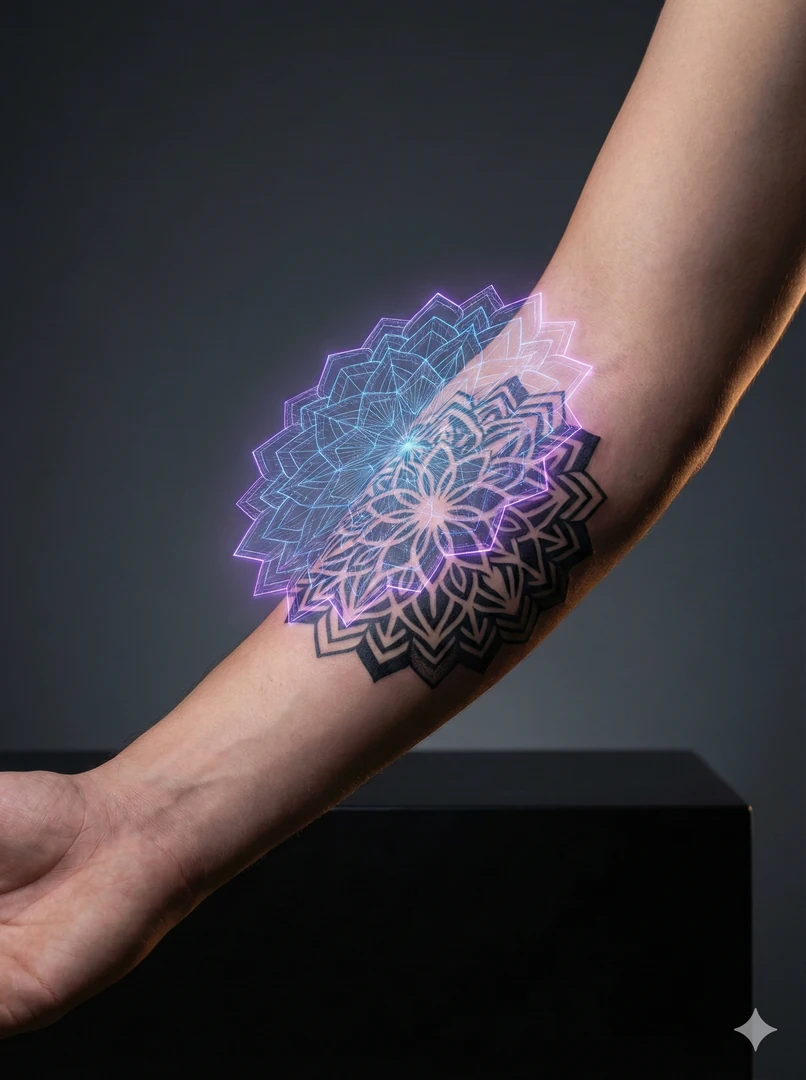
Birth flower tattoos have become one of the most personal and meaningful forms of body art. Unlike trend-driven designs, they're rooted in centuries of floral symbolism — each bloom carrying its own story, its own significance, its own connection to the person who wears it.
Whether you're celebrating your own birth month, honoring a loved one, or creating a family tribute piece, birth flower tattoos offer something rare: a design that's uniquely yours by nature.
This guide covers everything you need — the history, each month's flowers and meanings, design styles, placement, and how to make your birth flower tattoo truly personal.
The History of Birth Flowers: 200+ Years of Floral Symbolism
The concept of birth flowers predates modern tattoo culture by centuries. The practice traces back to ancient Egypt, Greece, and Rome, where specific flowers were associated with deities, seasons, and personal qualities. But it was during the Victorian era that birth flower symbolism reached its peak.
In 19th-century England, the art of "floriography" — the language of flowers — became a sophisticated social code. People used carefully chosen bouquets to send messages that polite society wouldn't speak aloud. A sprig of violet said modesty; a red carnation declared pure love. Victorian lovers exchanged flower meanings the way we exchange texts today.
This rich tradition passed into popular culture and eventually into tattoo studios. Today, birth flower tattoos bridge that Victorian elegance with modern body art, creating pieces that are both beautiful and deeply meaningful.
Why birth flower tattoos resonate so strongly:
- They carry personal symbolism tied to your identity
- They connect you to centuries of cultural meaning
- They work across virtually every tattoo style
- They age beautifully — floral designs remain timeless
- They make meaningful gifts and commemorative pieces
Your Birth Flower: Complete Month-by-Month Guide
Every month has its own flower (sometimes two), each with distinct visual characteristics and symbolic meanings.
January: Carnation & Snowdrop
Carnation — The carnation is January's primary birth flower and one of the oldest cultivated blooms, with a history stretching back over 2,000 years.
Meanings: Pure love, distinction, good luck, fascination Colors: Red carnations symbolize deep love; white represent pure love and luck; pink convey gratitude
Snowdrop — This delicate white bloom is January's secondary flower, one of the first to emerge from frozen ground.
Meanings: Renewal, rebirth, hope, the promise of spring Tattoo note: Snowdrop tattoos have a quiet, understated beauty — perfect for minimalist fine line work
February: Violet & Primrose
Violet — February's primary flower carries a sweet, romantic energy that makes it a popular choice for meaningful tattoos.
Meanings: Modesty, humility, admiration, tranquility, romantic devotion Tattoo note: Violets translate beautifully into watercolor styles, where their soft purple hues can be rendered with delicate washes of color
Primrose — This cheerful bloom adds warmth to February's palette.
Meanings: Young love, eternal life, can't live without you
March: Daffodil
The daffodil is March's birth flower and one of the most recognizable harbingers of spring.
Meanings: New beginnings, rebirth, cheerfulness, resilience, unrequited love Tattoo note: Daffodils work especially well in neo-traditional styles, where their trumpet-shaped heads allow for bold, graphic interpretations
April: Daisy & Sweet Pea
Daisy — Simple, bright, and universally recognized, the daisy carries surprising depth of meaning.
Meanings: Innocence, purity, new beginnings, true love, loyal friendship Tattoo note: Daisy tattoos are endlessly versatile — from tiny single-needle pieces behind the ear to sprawling botanical arrangements
Sweet Pea — This climbing flower adds a Victorian elegance to April's floral identity.
Meanings: Blissful pleasure, gratitude, goodbye and departure
May: Lily of the Valley
One of the most beloved birth flowers, the lily of the valley is May's delicate representative.
Meanings: Return to happiness, purity, humility, luck, completeness Tattoo note: The cascading bell-shaped flowers create natural movement in tattoo designs, making them especially stunning as wrist or forearm pieces. According to tattoo artist surveys, lily of the valley ranks among the top 5 most requested birth flower designs globally.
June: Rose & Honeysuckle
Rose — June's primary flower needs little introduction. It's the most tattooed flower in history for good reason.
Meanings: Varies dramatically by color — red for passionate love, white for purity, yellow for friendship, black for farewell or rebirth Tattoo note: Roses work in every tattoo style imaginable, from American traditional to hyperrealism
Honeysuckle — June's secondary flower brings warmth and positivity.
Meanings: Happiness, devoted affection, bonds of love
July: Larkspur & Water Lily
Larkspur (Delphinium) — This tall, dramatic bloom is July's primary birth flower.
Meanings: Positivity, grace, lightness, openness to new experiences Tattoo note: Larkspur's vertical, spike-like growth pattern makes it ideal for forearm or spine tattoos
Water Lily — July's secondary flower carries philosophical depth.
Meanings: Beauty, enlightenment, rebirth, spiritual awakening (deeply rooted in Buddhist symbolism)
August: Gladiolus & Poppy
Gladiolus — Named from the Latin for "sword," the gladiolus is August's proud primary flower.
Meanings: Strength, moral integrity, infatuation, remembrance of a loved one Tattoo note: The gladiolus's dramatic stalk makes it one of the most visually striking birth flower tattoos
Poppy — August's secondary flower carries some of the richest symbolism in the floral world.
Meanings: Remembrance, dreams, imagination, eternal sleep, beauty Tattoo note: Red poppy tattoos are particularly powerful memorial pieces. After WWI, the red poppy became an enduring symbol of remembrance for fallen soldiers.
September: Morning Glory & Aster
Morning Glory — September's primary flower opens fresh each morning, symbolizing renewal.
Meanings: Unrequited love, undying affection, mortality, love in vain Tattoo note: Morning glory vines work beautifully as wrap-around pieces for arms or ankles
Aster — This star-shaped flower (its name means "star" in Greek) is September's secondary bloom.
Meanings: Wisdom, faith, valor, love, patience
October: Marigold & Cosmos
Marigold — October's primary flower burns with warm, autumnal energy.
Meanings: Warmth, creativity, passion, courage, grief and mourning (in Mexican tradition, marigolds are central to Día de los Muertos celebrations) Tattoo note: Marigolds are one of the most culturally rich tattoo subjects, particularly in Mexican folk art and neo-traditional styles
Cosmos — October's delicate secondary flower offers a counterpoint to the marigold's intensity.
Meanings: Simplicity, harmony, balance, wholeness, order
November: Chrysanthemum
The chrysanthemum is November's sole birth flower, and it carries enormous cultural weight across multiple traditions.
Meanings: Longevity, happiness, good health, loyalty, joy In East Asian culture: The chrysanthemum represents nobility and perfection — it's the Imperial Seal of Japan In Western tradition: It symbolizes death and mourning in some European countries, but joy and longevity in others Tattoo note: Japanese-style chrysanthemum tattoos are among the most technically demanding and visually stunning in all of tattoo art. These pieces often span large areas of the back, sleeve, or thigh.
December: Poinsettia & Holly
Poinsettia — December's vibrant primary flower is synonymous with celebration.
Meanings: Good cheer, success, celebration, purity Tattoo note: Poinsettia tattoos are bold and graphic, working particularly well in neo-traditional or American traditional styles
Holly — December's secondary plant carries ancient protective symbolism.
Meanings: Protection, foresight, defense against evil spirits, domestic happiness
Birth Flower Tattoo Design Styles
Your birth flower can be interpreted through virtually any tattoo style. Here's how the most popular approaches translate:
| Style | Best For | Characteristics |
|---|---|---|
| Fine Line | Minimalists, first tattoos | Delicate, precise, elegant detail |
| Watercolor | Soft, painterly look | Color washes, no defined outlines |
| Neo-Traditional | Bold, graphic statement | Rich colors, defined outlines, stylized |
| Botanical Illustration | Nature lovers | Detailed, scientific illustration style |
| Japanese (Irezumi) | Large-scale pieces | Bold, flowing, highly symbolic |
| Hyperrealism | Maximum impact | Photographic detail, stunning 3D effect |
| Minimalist/Single Needle | Subtle, discreet | Ultra-thin lines, often small scale |
| Blackwork | Graphic, modern | Bold black fills and linework |
Pro tip: Look through your chosen artist's portfolio before deciding on a style. A great watercolor artist will elevate your design far more than an average hyperrealist, even if hyperrealism is theoretically more impressive.
Where to Place Your Birth Flower Tattoo
Placement shapes how your birth flower tattoo is experienced — by you and everyone who sees it.
Wrist and forearm — The most popular placement for birth flower tattoos. Visible but not aggressive, the forearm allows for designs ranging from single blooms to botanical arm pieces. Lily of the valley, violets, and morning glory vines look particularly natural here.
Ribcage and side — A more private placement that allows for larger, more intricate compositions. The natural curves of the ribcage can actually enhance flowing floral designs.
Shoulder and upper arm — Classic placement that transitions naturally into sleeve tattoos. Ideal for bold flowers like chrysanthemums, roses, and gladiolus.
Ankle and foot — Popular for delicate, smaller birth flower designs. Carnations, snowdrops, and daisies work beautifully at this scale.
Back and spine — Spine tattoos featuring a single stem of larkspur or lily of the valley have become one of the most-photographed tattoo placements on social media. Full back pieces featuring multiple birth flowers create stunning botanical compositions.
Collarbone — Elegant and understated, collarbone placements work best with delicate designs: fine-line violets, minimal daisies, or a single poppy.
Behind the ear — A discreet statement piece. Works best with small, simple designs — a single bloom or minimal botanical element.
Color Psychology: Making Your Birth Flower Tattoo Meaningful
Color isn't just aesthetic — it adds another layer of meaning to your tattoo. According to professional tattoo artists, color choice carries as much symbolic weight as the design itself.
Red: Passion, love, intensity — amplifies emotional meanings in roses, poppies, carnations Purple/Violet: Spirituality, wisdom, royalty — enhances the meaning of violets, irises, lavender Yellow/Gold: Happiness, optimism, friendship — transforms daisies and marigolds into celebrations of joy White (negative space): Purity, innocence, simplicity — often used in snowdrop and lily of the valley pieces Blue: Calm, trust, eternity — stunning in larkspur and morning glory designs Black and grey: Timelessness, elegance, seriousness — gives any flower an almost sculptural quality
Many clients choose to tattoo birth flowers in black and grey for longevity, as colored ink fades faster over time — particularly in areas exposed to sunlight.
Combining Birth Flowers: Family and Memorial Pieces
One of the most powerful uses of birth flower symbolism is creating compositions that honor multiple people — a partner, children, a parent, a friend who has passed.
Popular combination approaches:
- Birth months of your children — perhaps the most common use of multi-birth-flower tattoos. Parents combine blooms representing each child's birth month into a single unified design.
- Family bouquet — all family members represented as a wreath or gathered bouquet
- Memorial piece — combining the birth flower of a loved one who has passed with elements that connect to your shared story
- Partner piece — two birth flowers intertwined, sometimes with roots connecting beneath the skin
When combining flowers, work with your tattoo artist to ensure the different blooms complement each other visually. Some flowers pair naturally — rose and daisy, violet and lily of the valley — while others may require compositional creativity to harmonize.
How to Use AI to Design Your Birth Flower Tattoo
Before committing to a permanent design, it's worth exploring AI tattoo design tools to visualize possibilities. AI tattoo generators can produce dozens of variations — different styles, placements, color combinations — in minutes, giving you a much clearer sense of what you actually want before you walk into a studio.
Benefits of using AI design tools:
- Experiment with styles before committing
- See how your birth flower looks in different scales
- Generate reference images to share with your tattoo artist
- Combine multiple birth flowers to see how they interact
- Explore color combinations risk-free
This is especially valuable for complex pieces — like combining multiple family birth flowers — where getting the composition right matters enormously.
Choosing the Right Artist for Your Birth Flower Tattoo
Not all tattoo artists excel at botanical work. Finding the right artist makes the difference between a mediocre flower and a stunning one.
Step 1: Identify the style you want first. Watercolor, fine line, Japanese, neo-traditional — different artists specialize in different approaches. Don't ask a bold American traditional artist to do delicate single-needle botanicals.
Step 2: Search for botanical-specific portfolios. Look for artists who regularly post flower tattoos. Botanical illustration tattoos require a specific skill set — knowledge of plant anatomy, understanding of negative space, mastery of delicate linework.
Step 3: Review healed photos. Fresh tattoos look stunning on everyone. Healed photos tell the real story. Fine line and watercolor pieces especially can lose detail over time; an experienced artist accounts for this.
Step 4: Schedule a consultation. Discuss your concept, timeline, and budget. A good artist will offer compositional suggestions and may push back on ideas that won't translate well to skin.
Step 5: Don't rush for price. Quality botanical tattoos often start at $150-300 for small pieces and can run $500+ for detailed arm or back work. This is permanent — it's worth investing in the right artist.
Frequently Asked Questions
What is my birth flower? Each month has an assigned birth flower: January (Carnation/Snowdrop), February (Violet/Primrose), March (Daffodil), April (Daisy/Sweet Pea), May (Lily of the Valley), June (Rose/Honeysuckle), July (Larkspur/Water Lily), August (Gladiolus/Poppy), September (Morning Glory/Aster), October (Marigold/Cosmos), November (Chrysanthemum), December (Poinsettia/Holly).
Can I combine multiple birth flowers in one tattoo? Absolutely — and this is one of the most popular approaches. Many people combine their own birth flower with those of their children, partner, or parents into a single meaningful composition.
Do birth flower tattoos fade quickly? All tattoos fade over time. Colored birth flower tattoos fade faster than black and grey work, especially in areas exposed to sunlight. Fine line designs may lose some definition over years. Proper aftercare, sunscreen use on healed tattoos, and occasional touch-ups keep them looking sharp.
What size should a birth flower tattoo be? There's no rule. A single carnation can work at 2cm or 20cm. Consider your placement, design style, and how much detail you want to include. Watercolor and hyperrealistic styles typically need more space to show their best qualities; fine line work can be done at very small scales.
Are birth flower tattoos only for women? Not at all. Birth flower tattoos are worn by people of all genders. Japanese chrysanthemum pieces, bold neo-traditional marigolds, and graphic blackwork poppy designs are particularly popular across gender lines.
How painful are flower tattoos? Pain level depends much more on placement than design. Bony areas (ribs, spine, feet, elbows) are more intense; fleshy areas (outer arm, thigh, shoulder) are generally easier. Most people describe floral forearm pieces as moderate and very manageable.
Start Designing Your Birth Flower Tattoo
Birth flower tattoos endure because they're genuinely personal. Unlike trend-driven designs that age poorly, a well-executed birth flower tattoo connects you to something timeless — centuries of cultural meaning, the natural world, and the specific moment of your own existence.
The best approach: know your flower, know its meaning, find an artist whose style resonates with your vision, and take time exploring designs before committing. The result will be a piece that grows more meaningful with every year.
Ready to explore designs? Use an AI tattoo generator to visualize your birth flower in different styles and sizes before booking your appointment — it's the best way to walk into a studio knowing exactly what you want.