The tattoo industry never stands still. Each year brings fresh aesthetics, evolving techniques, and cultural shifts that reshape what people want permanently inked on their bodies.
2026 is proving to be one of the most exciting years for tattoo art in recent memory. We're seeing a fascinating collision of technology and tradition — AI-assisted design tools meeting centuries-old tattooing techniques, nostalgic Y2K aesthetics merging with cutting-edge minimalism, and a growing appreciation for how ink ages gracefully over time.
Whether you're planning your first tattoo or adding to an existing collection, understanding these trends helps you make choices you'll love for decades. Here's everything defining tattoo culture in 2026.
The Rise of Fluid Tattoos
The biggest breakout style of 2026 is undoubtedly fluid tattoos. Unlike the rigid geometric patterns or clean-lined minimalism that dominated recent years, fluid tattoos embrace organic movement and emotional expression.
Inspired by the flow of water, smoke, and abstract brushstrokes, this style is all about:
- Organic curves that follow the body's natural contours
- Dynamic shading that creates depth and dimension
- Seamless transitions between elements
- Emotional resonance over literal representation
Fluid tattoos often incorporate broken geometries, ink splashes, and watercolor-style bleeding edges. The result feels alive on the skin — as if the design is in constant motion.
Best placements: Ribs, forearm, shoulder, thigh — anywhere the body's natural movement enhances the design
Who it's for: Those who want art that feels expressive and unique rather than precisely defined
Cybersigilism: Where Digital Meets Occult
One of 2026's most distinctive trends is cybersigilism — a style that blends cyberpunk aesthetics with occult-inspired linework.
These designs feature:
- Sharp, angular lines reminiscent of circuit boards
- Mystical sigils and symbolic geometry
- Futuristic typography and digital glitch effects
- Dark, dramatic compositions often in pure black ink
Cybersigilism appeals to those who identify with both technology culture and spiritual symbolism. It's particularly popular among gamers, developers, and anyone who sees magic in the digital age.
The style often incorporates personal sigils — custom symbols designed to represent intentions or identities — making each piece deeply individual.
Best placements: Forearm, nape of neck, spine, sternum
Who it's for: Tech-forward individuals with an appreciation for mysticism and bold aesthetics
Fine Line Minimalism Evolves
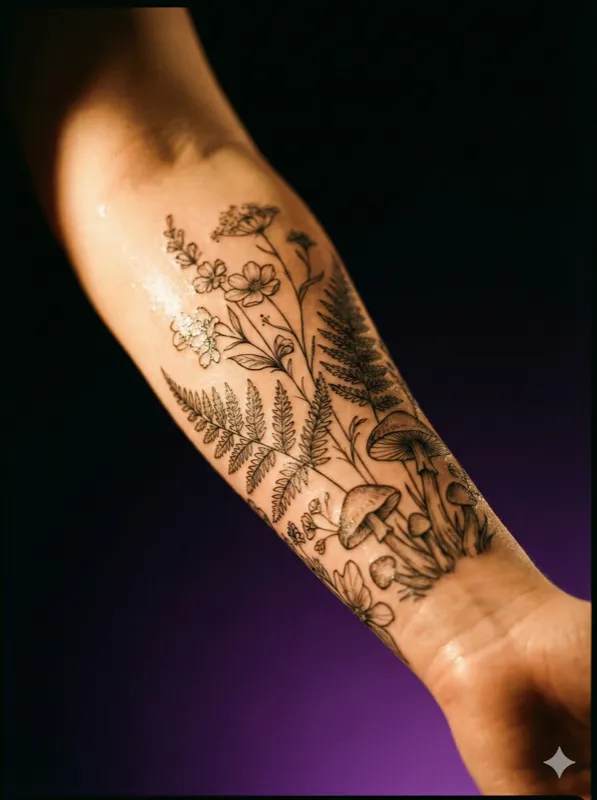
Fine line tattoos aren't new, but 2026 is seeing the style mature in interesting ways.
The focus has shifted from pure delicacy to intentional aging. Artists and clients are now having open conversations about how fine line work changes over five, ten, or twenty years — and designing with that evolution in mind.
Key developments in fine line for 2026:
| Evolution | What It Means |
|---|---|
| Slightly bolder lines | Still delicate, but designed to hold up over time |
| Strategic spacing | Elements positioned to remain distinct as ink spreads |
| Accent shading | Light shading added for longevity |
| Realistic expectations | Artists educating clients about natural softening |
Popular fine line subjects remain consistent: botanicals, portraits, script, delicate animals, and ornamental designs. But the execution is more thoughtful about the long game.
Best placements: Inner forearm, collarbone, behind ear, ankle
Who it's for: Those who appreciate understated elegance and accept graceful aging
The Y2K Revival in Full Swing
Nostalgia always cycles through tattoo culture, and 2026 belongs to the early 2000s.
Y2K-inspired elements flooding studios include:
- Tribal designs (reimagined with modern techniques)
- Chrome effects and metallic finishes
- Barbed wire and chain motifs
- Butterfly variations with gradient color
- Flames and fire imagery
- Gothic lettering and star patterns
- Cherries, hearts, and playful symbols
What makes this different from the original Y2K era is the execution. Modern artists apply these nostalgic concepts with contemporary skill — better linework, more sophisticated shading, and designs that age better than their predecessors.
The result is Y2K energy with 2026 quality.
Best placements: Lower back (yes, it's back), armband, ankle, chest
Who it's for: Millennials reconnecting with their youth, and Gen Z discovering Y2K aesthetics for the first time
Sticker-Style Tattoos: The Curated Collection Approach
The idea of tattoos as a "curated collection" rather than connected pieces continues gaining momentum in 2026.
Sticker-style tattoos look exactly like what they sound like — designs that appear as if colorful stickers were placed on the skin, often complete with:
- White borders mimicking sticker edges
- Bold, saturated colors
- Playful, illustrative subjects
- Intentionally scattered placement
This approach lets clients build their collection over time without committing to sleeves or large connected pieces. Each tattoo stands alone as a complete work.
Popular sticker-style subjects include:
- Food and drink (pizza slices, coffee cups, fruit)
- Retro pop culture references
- Animals in cartoon styles
- Nostalgic objects (cassette tapes, game controllers)
- Small landscapes or scenes
Best placements: Forearm, calf, thigh, upper arm — anywhere you'd stick actual stickers
Who it's for: Those who want variety and flexibility in their tattoo journey
Blackout and Heavy Blackwork
On the opposite end of the spectrum from delicate fine lines, blackout tattoos continue their rise in 2026.
These designs involve covering significant areas with solid black ink, creating:
- Bold geometric patterns emerging from black spaces
- Cover-up solutions for unwanted existing tattoos
- Striking negative space designs
- Almost sculptural effects on the body
Heavy blackwork remains popular for those wanting maximum visual impact. The style requires commitment — both in terms of sitting time and aesthetic boldness — but the results are undeniably dramatic.
2026 is also seeing more strategic blackout work, where artists use solid black sections as backgrounds or frames for other elements rather than full coverage.
Best placements: Full sleeve, half sleeve, chest panel, back
Who it's for: Those who want bold, statement-making ink and don't shy from commitment
AI-Assisted Design Goes Mainstream
Perhaps the most significant shift in tattoo culture isn't a style at all — it's the process.
AI tattoo generators have transformed how people approach design. Instead of arriving at studios with vague ideas or Pinterest boards, clients now come with:
- AI-generated concepts they've already refined
- Multiple variations of the same idea
- Designs previewed on their actual bodies
- Clear visualization of size, placement, and style
This doesn't replace tattoo artists — it enhances the consultation process. Artists appreciate clients who arrive with clear visions, and clients feel more confident committing to permanent ink they've already seen on their skin.
Our AI Tattoo Generator lets you:
- Describe any concept in plain language
- Choose from 12+ authentic tattoo styles
- Generate unlimited variations
- Preview designs on your body with the tattoo simulator
The result? Fewer regrets, better communication with artists, and tattoos that match exactly what you envisioned.
Meaningful Minimalism: Angel Numbers and Symbols
The intersection of spirituality and minimalism continues growing in 2026.
Angel number tattoos — sequences like 111, 444, or 777 believed to carry spiritual significance — have become one of the year's most requested designs. They appeal to:
- Those interested in manifestation and intention-setting
- People who want deeply personal but subtle tattoos
- Minimalists who prefer symbolic over literal imagery
Beyond angel numbers, small meaningful symbols are trending:
- Semicolons integrated into other designs (mental health awareness)
- Coordinates marking significant locations
- Date tattoos in minimalist formats
- Personal sigils and custom symbols
- Single-word scripts in elegant typography
These designs prioritize personal significance over visual complexity. Often the meaning is known only to the wearer, creating intimate connections with their ink.
Best placements: Wrist, finger, behind ear, ankle, collarbone
Who it's for: Those who want tattoos with deep personal meaning in understated forms
Placement Matters More Than Ever
2026 has brought renewed focus on strategic placement — choosing where a tattoo goes based on how it interacts with the body's natural movement and form.
Trending placements this year:
| Placement | Why It's Trending |
|---|---|
| Ribs | Designs that breathe with movement |
| Collarbone | Elegant framing for delicate work |
| Behind ear | Subtle reveals, perfect for minimalism |
| Forearm | Visibility without commitment to full sleeve |
| Finger | Statement pieces in tiny formats |
| Sternum | Centerpiece placement gaining momentum |
Artists are increasingly designing with specific placements in mind from the start, rather than adapting existing designs to fit. This body-conscious approach results in tattoos that feel integrated rather than placed.
How to Choose Your 2026 Tattoo
With so many compelling trends, choosing can feel overwhelming. Here's a practical framework:
Match Style to Intent
| If You Want... | Consider... |
|---|---|
| Emotional expression | Fluid tattoos, abstract work |
| Cultural connection | Y2K revival, traditional styles |
| Subtle meaning | Angel numbers, minimal symbols |
| Maximum impact | Blackout, heavy blackwork |
| Playful collection | Sticker-style pieces |
| Timeless elegance | Evolved fine line |
Consider the Long View
Every tattoo ages. The 2026 conversation around intentional aging is worth embracing. Ask yourself:
- Will I love this when the lines soften slightly?
- Does the design leave room for natural evolution?
- Am I choosing a trend, or something that resonates personally?
The best tattoos transcend trends while potentially incorporating them.
Visualize Before Committing
This is where technology genuinely helps. Use our tattoo simulator to:
- See the design on your actual body
- Test different sizes and placements
- Compare multiple concepts
- Arrive at your consultation confident
What's Next: Emerging Trends to Watch
A few developing movements could define late 2026 and beyond:
- Microrealism evolution — Even tinier realistic details in postage-stamp sizes
- UV and glow-in-dark ink — Returning with better, longer-lasting formulations
- 3D optical illusion designs — Playing with depth perception on flat skin
- Heritage revival — Traditional cultural tattooing styles gaining respect and preservation
The tattoo industry continues pushing boundaries while honoring its roots. 2026 captures that balance perfectly.
Start Designing Your 2026 Tattoo
Ready to explore these trends for yourself?
- Generate ideas with our AI Tattoo Generator
- Explore styles from fluid to fine line to blackwork
- Preview on your body using the tattoo simulator
- Bring your vision to a skilled artist
The perfect tattoo combines trend awareness with personal meaning. Now you have both.
Frequently Asked Questions
Are trend tattoos a bad idea?
Not inherently. Some trends (like quality fine line work) become timeless. The key is choosing trends that genuinely resonate with you rather than getting something solely because it's popular.
How do I find an artist who specializes in these styles?
Search Instagram and portfolio sites for artists who consistently produce work in your desired style. Look at healed photos, not just fresh tattoos. Most artists have preferred styles they excel in.
Will AI-generated designs replace tattoo artists?
No. AI tools help with ideation and visualization, but skilled tattoo artists remain essential for adapting designs to skin, ensuring proper execution, and bringing artistic expertise that AI cannot replicate.
How long do fluid tattoos take to complete?
Depending on size and complexity, fluid tattoos typically require 2-6 hours. Larger pieces may need multiple sessions. The organic nature of the style often means more shading work than simple line designs.
Is the Y2K revival here to stay?
Nostalgia cycles are cyclical by nature. The Y2K trend will likely evolve rather than disappear entirely, with elements being absorbed into mainstream tattoo vocabulary. Choose Y2K elements you genuinely love rather than chasing the trend.
Explore more: Tattoo Styles Guide | Your First Tattoo: Beginner's Guide | Tattoo Meanings & Symbolism