
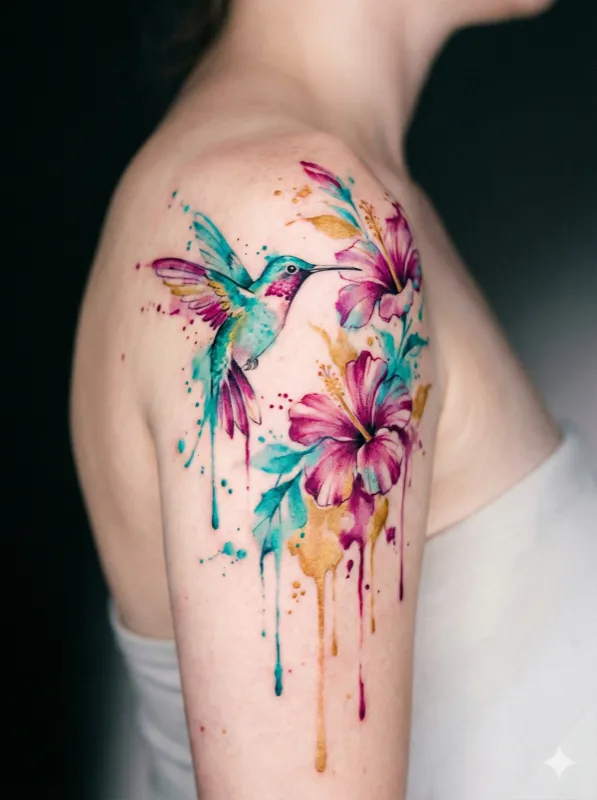
Mandala tattoos occupy a rare intersection: they're both deeply spiritual and undeniably beautiful. Rooted in ancient Hindu and Buddhist traditions as meditation objects and representations of the cosmos, mandalas have become one of the most requested tattoo designs worldwide — and for good reason. Their perfect radial symmetry, intricate detail work, and layered symbolic meaning create pieces that are visually stunning and personally meaningful.
Whether you're drawn to the spiritual significance, the geometric elegance, or simply the way a well-executed mandala commands attention, this guide covers everything: what mandala tattoos actually represent, the major design styles, the best placements for different sizes and aesthetics, how to find the right artist, what the process involves, and how AI tools are changing the way people design their pieces.
What Is a Mandala Tattoo?
The word mandala comes from Sanskrit, meaning "circle" or "center." In Hindu and Buddhist traditions, mandalas are geometric diagrams of the cosmos — representations of the universe, spiritual wholeness, and the relationship between the individual self and the infinite.
A classic mandala structure radiates outward from a central point in concentric rings, each layer containing symbolic geometric shapes, lotus petals, triangles, dots, and interlocking patterns. The design reads the same from any direction — perfect radial symmetry that represents unity, harmony, and completeness.
As tattoos, mandalas carry this symbolism into permanent form. The circular structure represents:
- Wholeness and completion — the circle has no beginning or end
- Balance and harmony — radial symmetry reflecting inner equilibrium
- The universe and the self — the cosmos mirrored in the individual
- Spiritual journey — the inward movement from the outer rings toward the center point
- Protection — many traditions use mandala-like forms as protective amulets
Beyond their spiritual roots, mandala tattoos have become a contemporary art form in their own right. Modern tattoo artists have developed distinct styles that draw from — and expand upon — the traditional form while creating work that speaks to contemporary aesthetics.
The 7 Major Mandala Tattoo Styles
1. Traditional/Sacred Geometry Mandala
The most spiritually rooted style, traditional mandala tattoos draw directly from Hindu yantra and Buddhist thangka traditions. They feature:
- Classic lotus petal arrangements (typically 8 or 16 petals)
- Nested geometric forms: circles, squares, triangles
- Symbolic figures from Hindu or Buddhist cosmology
- Dense, intricate linework throughout all rings
- Often integrated with Om symbols, Sanskrit script, or deity figures
Traditional mandalas work best with artists who have studied the symbolic vocabulary deeply — every element placement carries meaning, and thoughtful execution matters.
2. Dotwork Mandala
One of the most popular current styles. Dotwork mandalas use thousands of individually placed dots rather than solid fills or continuous shading to create all tonal variation. The effect is extraordinary:
- A slightly organic, textured quality that feels almost meditative to look at
- Gradients created entirely through dot density variation
- Stunning contrast between dense black areas and bare skin
- An almost engraved quality that ages exceptionally well
Dotwork mandalas are particularly striking in black ink, though some artists incorporate subtle color gradients through selective dot placement in colored inks.
Best placements for dotwork mandalas: Chest, upper back, thigh, shoulder
| Style Feature | Dotwork Mandala | Fine Line Mandala | Blackwork Mandala |
|---|---|---|---|
| Technique | Individual dots | Continuous thin lines | Solid black fills |
| Shading | Dot density | Minimal/none | Negative space |
| Texture | Visible dot pattern | Smooth | Flat |
| Aging | Excellent | Good | Excellent |
| Best size | Medium–Large | Small–Large | Medium–Large |
| Detail capacity | Extremely high | Very high | High |
| Healing complexity | Low | Low | Moderate |
3. Fine Line Mandala
Fine line mandalas use ultra-thin continuous lines — often as thin as a single needle can produce — to create extraordinarily delicate, lace-like designs. They look almost drawn on the skin.
Characteristics:
- Minimal to no shading — pure linework
- Exceptionally intricate detail work possible in smaller sizes
- A delicate, feminine aesthetic that contrasts with bold blackwork
- Faster healing with less skin trauma
Important consideration: Fine line tattoos fade faster than bolder work, especially in high-friction areas. Expect touch-ups every 5-8 years to maintain crispness.
4. Geometric/Sacred Geometry Mandala
A contemporary style that blends traditional mandala structure with modern mathematical precision. Sacred geometry mandalas feature:
- Platonic solids and their 2D representations
- Flower of Life, Metatron's Cube, Seed of Life integration
- Perfect geometric forms: equilateral triangles, hexagons, pentagons
- Deliberately engineered proportions based on sacred ratios
- A modern, almost architectural aesthetic
Sacred geometry mandalas appeal strongly to people interested in mathematics, physics, philosophy, or esoteric traditions — the visual language speaks to underlying universal patterns.
5. Floral Mandala
Floral mandalas weave botanical elements into the geometric structure. Rather than pure abstract geometry, they integrate:
- Rose, lotus, peony, or daisy shapes within the ring structure
- Leaves and vines creating organic transitions between geometric sections
- Watercolor or soft black-and-grey shading for the botanical elements
- Sometimes: colored ink for flowers against black geometric framework
Floral mandalas have a distinctly organic warmth that pure geometric designs lack, making them popular with people who want mandala structure but find purely abstract designs too cold.
6. Colored Mandala
While most mandala tattoos are done in black ink, colored mandalas can be extraordinary. Popular approaches include:
- Single-color washes — all black linework with one accent color (often deep blue, burgundy, or forest green)
- Full spectrum — vibrant colors filling each geometric section differently
- Watercolor wash — soft, paint-like color applications behind black linework
- White highlight work — black mandala with white ink details for a sculptural effect
Color considerations: Bright colors require more maintenance than black ink. Sun protection is critical for preserving color saturation.
7. Half/Unfinished Mandala
A modern design trend: mandala compositions that are intentionally asymmetric or "unfinished." The design may:
- Extend from a central point only partway around the circle
- Dissolve into negative space on one side
- Integrate with other design elements (arrows, feathers, animals)
- Reference the concept of wabi-sabi — the beauty of incompleteness
Half mandalas work particularly well on forearms, collarbones, and behind the ear where a full circular design wouldn't fit naturally.
The Best Placement Locations for Mandala Tattoos
Placement dramatically affects how a mandala reads — the wrong placement can distort the radial symmetry and undermine the design. Here are the best locations ranked by suitability:
Upper Back / Spine
Rating: ★★★★★ (Best overall placement)
The upper back is the ideal canvas for a large mandala. The flat, relatively undistorted plane allows perfect radial symmetry to shine. A sternum-to-shoulder-blade mandala can be genuinely stunning. The spine center allows for perfectly centered compositions.
- Size range: 6–14 inches across
- Pain level: Moderate (spine) to Low (flanking shoulder blades)
- Visibility: High (with open back clothing)
- Aging: Excellent (minimal sun exposure, low friction)
Thigh / Upper Leg
Rating: ★★★★★ (Best for large pieces)
The outer thigh is the largest relatively flat canvas on the body, making it ideal for elaborate, highly detailed mandalas. The inner thigh suits more intimate, personal pieces.
- Size range: 6–18 inches possible
- Pain level: Low–Moderate
- Visibility: Easily concealed or revealed
- Aging: Excellent (low sun exposure, minimal friction)
Chest / Sternum
Rating: ★★★★☆
Centered chest mandalas are powerful, visible, and deeply personal. The sternum placement creates a striking visual anchor. Breast/chest placement requires accounting for natural body contours.
- Size range: 4–10 inches
- Pain level: Moderate–High (bone proximity)
- Visibility: Intimate to high depending on neckline
Shoulder / Deltoid
Rating: ★★★★☆
The shoulder's rounded surface adds subtle three-dimensionality to circular designs — they seem to wrap the body rather than sit flat on it. Excellent for medium mandalas that extend into sleeve compositions.
- Size range: 4–8 inches
- Pain level: Low–Moderate
- Aging: Good (watch sun exposure)
Forearm
Rating: ★★★★☆
Inner forearm mandalas are highly visible and suit medium-to-large designs well. The forearm's cylindrical shape means very large designs may appear distorted — stick to designs that fit within the inner arm's width.
- Size range: 3–6 inches
- Pain level: Low–Moderate
- Aging: Good (some sun and friction — moisturize)
Hand / Mandala Mehndi Style
Rating: ★★★☆☆ (Special consideration)
Hand mandalas — particularly mandala designs radiating from the back of the hand — are striking but require careful consideration. Hands fade faster than anywhere on the body due to constant washing, friction, and sun exposure. Expect regular touch-ups every 2-3 years.
Behind the Ear / Neck
Rating: ★★★☆☆
Small mandalas (1–3 inches) behind the ear or on the back of the neck are delicate and elegant. Limited canvas size restricts complexity.
Mandala Tattoo Meanings: What Each Symbol Represents
Traditional mandala symbolism is rich and layered. If you're drawn to specific elements, understanding their traditional meanings adds personal depth:
Central dot (bindu): The origin point of creation, the individual self, the moment of birth from nothingness. Every mandala radiates from this point.
Lotus petals: Spiritual awakening, purity arising from muddy waters, the journey from darkness to light. Eight petals traditionally represent the Noble Eightfold Path; sixteen petals represent completeness.
Triangles:
- Upward-pointing: masculine energy, fire, aspiration toward the divine
- Downward-pointing: feminine energy, water, receptivity
- Interlocking (Star of David / Shatkona): union of opposites, spiritual harmony
Circles: Wholeness, eternity, cycles of time, the universe itself
Square: Earth, stability, the four cardinal directions, the physical world
Eight-spoked wheel (Dharmachakra): The Buddhist Wheel of Dharma — the Noble Eightfold Path and the cyclic nature of existence
Om symbol: The primordial sound of the universe, spiritual power, connection to ultimate reality
Lotus and diamond (vajra): Compassion and wisdom united — the two qualities needed for enlightenment in Vajrayana Buddhism
How to Find the Right Mandala Tattoo Artist
Mandala tattoos are technically demanding. Not every skilled tattoo artist is well-suited for mandala work — the requirements are specific:
What to Look For
Portfolio evidence: Look for existing mandala work with geometrically precise symmetry. Any wobble in the rings, any inconsistency in dot placement or line weight, will be immediately visible in the finished piece. The portfolio doesn't lie.
Specialization: Artists who specialize in geometric, dotwork, or sacred geometry work are your best starting point. Look at their most recent pieces — skill level changes, and older portfolio work may not represent current capability.
Consultation approach: Good mandala artists ask detailed questions about your symbolic intentions, preferred style, and placement before drawing anything. The design process should feel collaborative, not rushed.
Free-hand vs. stencil: Many top geometric artists work free-hand for at least portions of mandala designs — the ability to lay perfect symmetry directly onto skin is a real skill worth seeking. Others use precise printed stencils. Both approaches can yield excellent results; what matters is precision in execution.
Red Flags to Avoid
- Portfolio with no mandala or geometric examples
- Rushed consultations with generic designs pulled from flash sheets
- Unwillingness to discuss the symbolic content
- Poorly healed examples showing ink blowout in dotwork areas
- Inconsistent line weights within geometric rings
Questions to Ask at Consultation
- How do you approach achieving perfect symmetry on curved body surfaces?
- What's your preferred technique for dotwork sections — machine or hand-poke?
- How many sessions might this piece require, and how do you approach shading builds?
- How does this placement area typically heal, and what care do you recommend?
- Can I see healed examples of your mandala work specifically?
What to Expect: The Mandala Tattoo Process
Design Phase
For custom mandalas, expect a design process of 1-4 weeks. Your artist will:
- Take measurements and discuss placement precisely
- Draft the composition digitally or on paper
- Share for your review and revisions
- Finalize the stencil
Important: Never rush the design phase. A mandala that's slightly off-center, missing a ring, or has inconsistent spacing will bother you every time you look at it. Take the time to get it right on paper before it's on your skin.
Session Length
Mandala tattoos are time-intensive:
| Size | Estimated Session Time |
|---|---|
| Small (2–4 inches) | 2–4 hours |
| Medium (4–7 inches) | 4–8 hours |
| Large (8–12 inches) | 8–15 hours (multiple sessions) |
| Full back mandala | 20–40+ hours (multiple sessions) |
Dotwork mandalas take longer than equivalent-size solid-fill work due to the individual dot placement process.
Pain Considerations
Mandala placement strongly determines pain level:
- Lower back / hips: Higher pain (bony areas, nerve concentration)
- Spine: Moderate–High (direct bone contact in places)
- Thigh / upper arm: Low–Moderate (heavy muscle cushioning)
- Ribs: High (minimal tissue, breathing movement)
- Shoulder blade area: Low–Moderate
Mandala sessions are often long — plan to build in breaks every 90–120 minutes for large pieces.
Healing Timeline
Standard tattoo healing applies with some mandala-specific considerations:
- Days 1–3: Redness, swelling, weeping plasma — normal
- Days 3–7: Peeling begins — do not pick or scratch
- Weeks 2–4: Surface skin appears healed; underlying layers still settling
- Months 2–4: Ink fully sets, final appearance visible
- Full healing: 4–6 months
Dotwork areas require particular attention during healing — the individual dot structure can blur slightly if healing is disrupted. Avoid submersion in water for at least 3 weeks.
Mandala Tattoo Aftercare Essentials
Proper aftercare is critical for preserving the intricate detail work that makes mandalas special:
Immediate care (first 2 weeks):
- Keep wrapped per your artist's instructions (typically 2-24 hours)
- Wash gently 2-3 times daily with unscented soap
- Apply thin layer of fragrance-free lotion (Lubriderm, Aquaphor)
- Avoid direct sun exposure completely
Ongoing care:
- Apply SPF 50+ sunscreen every time the tattoo is exposed to sun
- Moisturize daily with unscented lotion
- Avoid prolonged water submersion (pools, ocean) for at least 3 weeks
- Never scratch healing skin — pat gently if itching
For dotwork specifically: Avoid rubbing the healed area aggressively for the first few months. The dot structure is stable once healed, but aggressive exfoliation before full healing can disrupt ink settling.
Designing Your Mandala with AI
One of the biggest challenges with mandala tattoos is visualization — it can be very difficult to know what a design will actually look like on your specific body until it's being applied. This is where AI tattoo generators have become genuinely useful.
Modern AI tattoo design tools allow you to:
- Generate custom mandala concepts based on your style preferences, size requirements, and placement
- Visualize placement on a realistic body reference before committing to a design
- Explore style variations — dotwork vs. fine line vs. blackwork — quickly
- Refine elements — adjust petal counts, ring complexity, outer border styles
- Create starting-point references for artist consultations
AI-generated designs aren't meant to replace the custom work of a skilled tattoo artist. They're a powerful tool for narrowing down your aesthetic preferences and arriving at consultations with a clear visual direction — which saves time, reduces miscommunication, and often results in better final designs.
How to get the most from AI mandala design:
- Start with style — specify dotwork, fine line, geometric, or floral
- Define size and placement — a back mandala generates differently than a wrist piece
- Specify symbolic elements — lotus, sacred geometry, Om, etc.
- Iterate — generate multiple variations and look for elements you love across them
- Bring prints to consultation — showing your artist 3–5 reference images is worth 1,000 words of description
Frequently Asked Questions
How much does a mandala tattoo cost?
Pricing depends heavily on size, complexity, artist experience, and geographic location. Rough ranges:
- Small simple mandala (2–4"): $150–400
- Medium detailed mandala (5–8"): $400–1,200
- Large complex mandala (9–12"): $1,200–3,000+
- Full back mandala: $3,000–8,000+
Never choose a mandala artist based on price — the complexity of the work means quality differences are immediately obvious.
Do mandala tattoos age well?
Very well, particularly dotwork and blackwork styles. Black ink mandalas maintain their structural integrity for decades with proper sun protection. Fine line mandalas require touch-ups more frequently. Avoid placement in areas with extreme friction (palms, finger undersides, feet).
Can mandalas be done in color?
Yes, though most are done in black ink. Adding color significantly increases cost and healing complexity. Colored mandalas require more touch-ups over time to maintain saturation.
How painful are mandala sessions?
Variable by placement. The long session length is often more challenging than the pain itself — focus, stamina, and staying still become factors in sessions over 4 hours. Eat well beforehand, stay hydrated, and communicate with your artist about needed breaks.
Is it disrespectful to get a mandala tattoo without Hindu or Buddhist beliefs?
This is a nuanced question. Most Hindu and Buddhist practitioners and scholars distinguish between appropriation (taking without understanding or respect) and appreciation (engaging thoughtfully with a tradition's visual language). A mandala tattoo undertaken with genuine understanding of its symbolism, or simply as a beautiful geometric art form, is generally not considered problematic. Avoid getting specific sacred religious images (deity representations, specific yantra diagrams with ritual power) tattooed purely for aesthetic reasons without understanding what they represent.
What's the difference between a mandala and a yantra?
A yantra is a specific type of mandala — a geometrical meditation diagram associated with a particular deity or spiritual practice in Hindu and Tantric traditions. Yantras typically feature more angular forms (triangles, hexagrams) and are associated with specific ritual use. All yantras are mandalas; not all mandalas are yantras.
Mandala tattoos are one of the most rewarding tattoo investments you can make — complex enough to reward repeated viewing, meaningful enough to carry personal significance for decades, and executed well enough by skilled artists to age gracefully through a lifetime. The key is patience: in the design phase, in choosing the right artist, and in the healing process.
When you get it right, a mandala tattoo doesn't just sit on your skin — it becomes part of you.
Ready to start designing your mandala tattoo? Try our AI tattoo generator to explore mandala styles, placements, and design concepts — then bring your favorites to your artist consultation.