Few tattoo subjects carry the emotional weight that an elephant does. These are animals associated with memory, family bonds, wisdom earned through experience, and a kind of patient strength that has no need to announce itself. They are also creatures that grieve, play, protect their young with fierce devotion, and communicate in frequencies we can barely detect. That depth of character is exactly what draws people to elephant tattoos year after year — and why they never seem to go out of style.
Whether you're drawn to the spiritual iconography of Ganesha, the matriarchal loyalty of an African herd, or simply the powerful silhouette of the world's largest land animal, an elephant tattoo can be designed to say almost anything. This guide covers the full picture: symbolism, cultural meanings, every major style, the best body placements, and how to use AI tools to design yours before you ever walk into a studio.
What Does an Elephant Tattoo Mean?
Elephant tattoo symbolism is consistently positive across virtually every culture that has encountered these animals — which is unusual. Most powerful animals carry some negative associations (wolves can represent danger, snakes deception), but elephants have been universally admired.
The core meanings most people associate with elephant tattoos:
- Wisdom and long memory — Elephants genuinely have exceptional memories, recognizing individuals and remembering locations decades later. A tattoo of an elephant often signals that the wearer values knowledge accumulated through lived experience.
- Strength without aggression — The elephant is the most powerful land animal on Earth, yet it spends its days eating, socializing, and caring for its young. That combination of raw power held in restraint resonates deeply.
- Family loyalty and protection — Elephants live in close-knit matriarchal herds where every adult participates in raising calves. An elephant tattoo can honor family bonds, maternal love, or the community you'd protect at any cost.
- Good luck and prosperity — Particularly in Southeast and South Asian traditions, elephants are powerful symbols of fortune and abundance.
- Patience and longevity — Elephants live up to 70 years in the wild, reaching their fullest power and wisdom in middle age. They symbolize the rewards of endurance.
- Spiritual protection — In numerous traditions, the elephant stands guard at thresholds, keeping negative energies away.
Trunk Up vs. Trunk Down: The Detail That Changes Everything
One of the most common questions about elephant tattoos is whether the trunk position matters. The short answer: it matters symbolically but not universally.
Trunk raised (up): In Hindu tradition and widely in feng shui, a raised trunk signals good luck, happiness, and the showering of blessings on those nearby. It's the celebratory posture — an elephant lifting its trunk emits a trumpeting call, a sound associated with victory and announcement.
Trunk lowered (down): A lowered trunk isn't necessarily negative. In some interpretations it represents grounded energy, deep introspection, or the preservation of strength — a reminder that not every powerful thing needs to be on display. Many people simply prefer the aesthetic of a naturally relaxed trunk, and design choices should always come before symbolic orthodoxy.
Trunk curled inward: Sometimes interpreted as the elephant drawing luck inward toward itself or its owner, representing protection and retention of good fortune.
Ultimately, choose what resonates with you. The personal meaning you assign to your tattoo will always be more important than any external tradition.
Elephant Tattoo Symbolism Across Cultures
The elephant's presence in human symbolic life spans every continent where these animals have been known, and in each culture, the meaning has been remarkably consistent.
Hindu Tradition: Ganesha
No animal is more sacred in Hinduism than the elephant, and no deity more beloved than Ganesha — the elephant-headed son of Shiva and Parvati. Ganesha is the remover of obstacles, the lord of beginnings, the patron of intellect and wisdom. He is invoked before any important undertaking: a new business, a marriage, a journey, an exam.
A Ganesha tattoo is one of the most popular elephant-themed designs in the world, worn by Hindu devotees and non-Hindus alike who are drawn to his energy of intelligence, humor, and the clearing of life's blockages. If you're not Hindu, approach a Ganesha tattoo with awareness and respect — many practitioners request that the image not be placed below the waist.
Buddhist Tradition: The White Elephant
In Buddhist cosmology, the white elephant holds extraordinary significance. According to tradition, Queen Maya — the mother of the Buddha — dreamed of a white elephant entering her womb on the night she conceived. The white elephant thus represents purity, royal power, and the miraculous. In Thailand, a white elephant is still considered a national treasure.
More broadly, Buddhist teachings use the elephant as a metaphor for the untrained mind: powerful, potentially destructive when wild, but capable of becoming a vehicle of extraordinary service when cultivated through patience and practice.
African Tradition
In sub-Saharan African cultures, the elephant has long represented wisdom, strength, and ancestral memory. The elephant is one of the "Big Five" but occupies a uniquely spiritual position — seen as an elder among animals, deserving of reverence. The matriarch of the herd, who carries decades of migratory knowledge in her memory, is a symbol of feminine leadership and community knowledge that passes from generation to generation.
Celtic and European Traditions
Though elephants were rare in northern Europe, they appeared in Roman contexts as symbols of strength, longevity, and conquest. In Celtic-influenced designs, elephant imagery is often combined with knotwork and interlace patterns — the animal's form adapted to the geometric vocabulary of Celtic art. This fusion creates striking tattoos that honor multiple heritages simultaneously.
Chinese and Southeast Asian Traditions
In China, the elephant represents good luck, wisdom, and protection. It's associated with the white elephant of Buddhism and often depicted with a coin in its trunk to represent financial fortune. In Thailand and Sri Lanka, both historically elephant-working cultures, these animals are seen as partners — beings of enormous strength and intelligence that chose to work alongside humans.
Popular Elephant Tattoo Styles
The elephant's form adapts remarkably well to every major tattoo style. Here are the approaches that produce the best results:
Realistic Elephant Tattoos
Photorealistic elephant portraits are among the most technically demanding tattoos you can commission — and among the most stunning. The deeply textured skin, the expressive eyes, the complex wrinkles and folds of the trunk: all of this rewards an artist who can work with fine-line precision and subtle gray shading.
Best for: Large formats — chest, back, thigh. Black and gray realism tends to age better than color realism for elephant portraits.
Find an artist who: Specializes in wildlife portraiture and has a portfolio specifically including elephant or large mammal work.
Geometric Elephant Tattoos
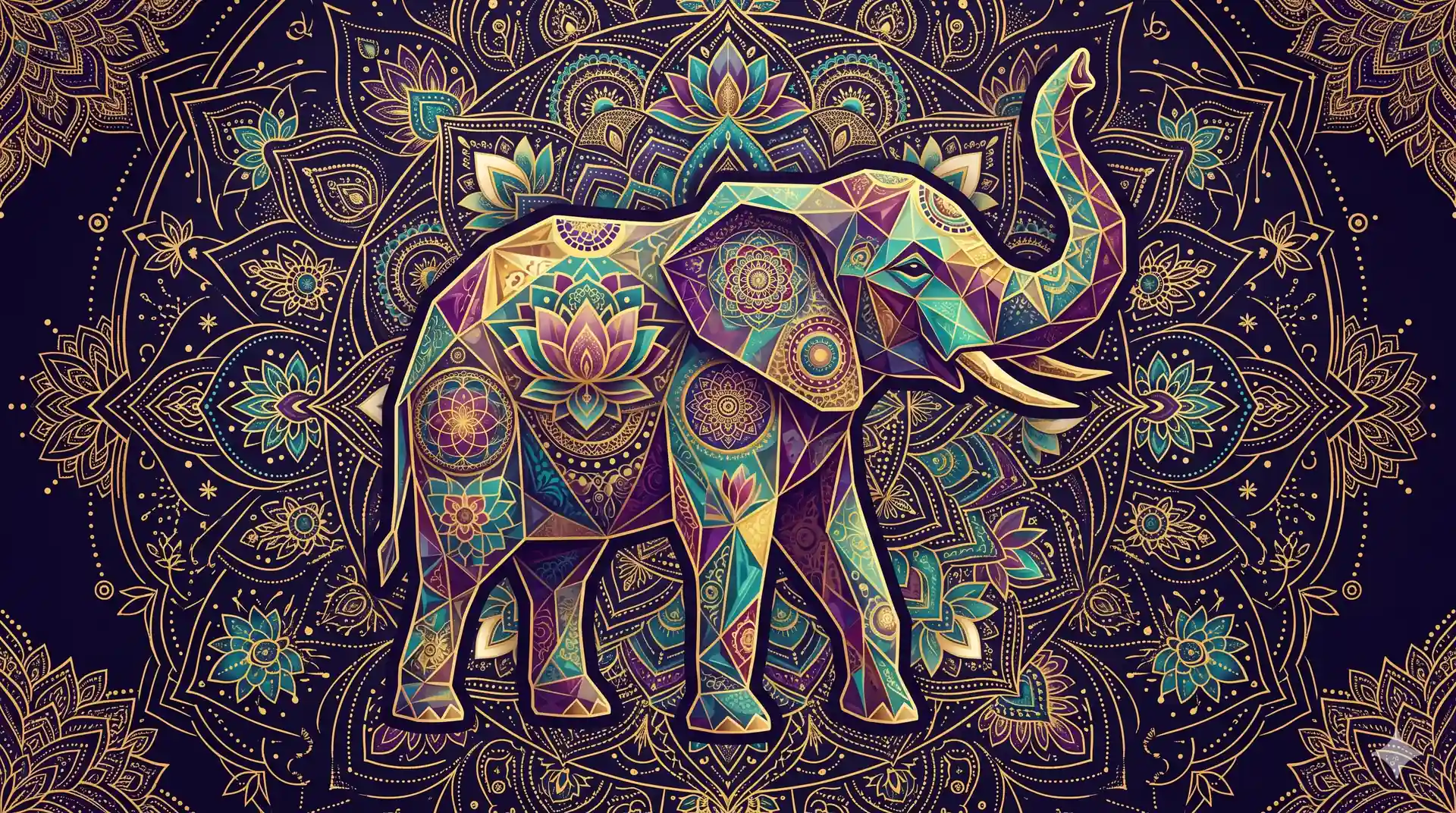
One of the most popular contemporary approaches, geometric elephant tattoos reduce the animal's form to clean lines, triangles, and polygons — sometimes creating a low-poly 3D effect, sometimes producing a flat geometric silhouette. The contrast between the organic subject and the mathematical precision of the geometric style creates visual tension that many people find compelling.
Best for: Upper arm, shoulder, thigh. Scales well from small to medium sizes.
Design note: The most effective geometric elephant tattoos maintain enough recognizable elephant anatomy — the ear shape, trunk curve, tusks — that the subject is immediately identifiable even in abstracted form.
Watercolor Elephant Tattoos
Watercolor tattoos use splashes and bleeds of vivid color without black outlines, creating a painterly effect. On an elephant, this style transforms a grey, powerful animal into something luminous and almost dreamlike — a burst of purple, teal, and gold against the skin.
Longevity consideration: Pure watercolor tattoos (no black linework) tend to fade and blur over time. Most experienced tattoo artists recommend a solid black outline — even a subtle one — to maintain the design's definition as it ages.
Best for: Medium to large sizes. The back of the upper arm and shoulder blade are particularly effective placements.
Minimalist and Fine Line Elephant Tattoos
Simple line drawings of elephants — sometimes just a few continuous strokes capturing the silhouette — are among the most versatile tattoo designs available. They work at almost any size, fit virtually any placement, and age cleanly. A fine-line elephant can be a delicate wrist tattoo or a small, precise piece behind the ear.
Best for: Wrist, ankle, inner arm, behind the ear, ribcage. These placements suit the intimacy of a small, refined design.
Blackwork Elephant Tattoos
Blackwork uses solid black ink in bold, graphic compositions. An elephant rendered in blackwork — with strong outlines, heavy fill, and minimal internal detail — creates a striking, tattoo-traditional look that photographs well and holds its definition for decades.
Mandala blackwork is a particularly popular fusion: the elephant form filled with mandala patterns, sacred geometry, and dotwork stippling. This style connects the animal's spiritual symbolism directly to geometric spiritual forms.
Japanese-Influenced Elephant Tattoos
Though elephants don't appear in classical Japanese tattooing (which draws from Japanese mythology and nature), contemporary Irezumi-influenced work sometimes incorporates elephants treated in the Japanese style: bold outlines, flat areas of color, dramatic negative space, and integration with Japanese decorative elements like waves, peonies, or clouds.
Tribal Elephant Tattoos
Tribal designs — whether inspired by specific traditions like Maori, Polynesian, Balinese, or African tribal art — apply bold black patterns to the elephant's form. In some cases, the entire body of the elephant is filled with tribal patterns; in others, the elephant's silhouette is composed of flowing tribal lines. These designs tend to be graphic, bold, and hold definition beautifully over time.
Elephant Tattoo Design Variations
Within any style, the specific design elements you choose will define what your tattoo communicates:
Elephant Family and Mother-Calf Designs
A mother elephant with her calf is one of the most emotionally resonant tattoo subjects available. The physical tenderness of the image — the protective curve of the mother's trunk around the calf, the size difference, the clear bond — makes it a natural tribute to maternal love, the relationship with a parent, or the experience of becoming a parent yourself.
Elephant with Flowers
Combining an elephant with floral elements — lotus flowers for spiritual symbolism, roses for love, wildflowers for freedom — softens the power of the subject and creates a balance of strength and beauty that many people find personally meaningful. Lotus flowers in particular pair naturally with elephant symbolism given their shared roots in Buddhist and Hindu traditions.
Elephant with Mandala
As noted above, the elephant-mandala combination is one of the most popular tattoo designs in the world right now. The mandala — representing the universe, wholeness, and the cyclical nature of existence — serves as a framework that gives the elephant's power a spiritual context. The circular geometry of the mandala and the organic roundness of the elephant's form work together naturally.
Baby Elephant Tattoos
Baby elephant tattoos — small, round, clearly juvenile, sometimes cartoonish — represent innocence, playfulness, new beginnings, and the joy of young life. They're often chosen to celebrate the birth of a child, to honor someone's playful spirit, or simply because the image is unambiguously delightful.
Elephant Silhouette Tattoos
Silhouette designs reduce the elephant to its most essential form — a recognizable profile or head-on shape — often filled with a landscape, galaxy, watercolor wash, or meaningful scene. The "world within a shape" concept works especially well with elephants because the broad body provides generous canvas space.
Best Placement for Elephant Tattoos
Placement decisions depend on the design's size and complexity, your pain tolerance, and how prominently you want to display the tattoo.
Upper Arm and Shoulder
The upper arm and shoulder are the most popular locations for medium-to-large elephant tattoos. The rounded surface of the shoulder accommodates the elephant's form naturally, and pieces here are easy to show or conceal depending on the situation. The bicep allows for a full side-profile elephant design with excellent detail.
Pain level: Moderate — among the more comfortable locations.
Back and Chest
The back offers the largest canvas available for a tattoo and allows for full-scene elephant compositions — a herd moving across a savanna, a detailed elephant portrait, or a large mandala-elephant fusion. Chest pieces require more care around the sternum but offer impressive visual impact.
Pain level: Upper back is moderate; lower back and sternum are more sensitive.
Thigh
The thigh is increasingly popular for large, detailed tattoos because it provides generous flat canvas and heals reliably. An elephant thigh piece can be as detailed as a back piece with slightly less commitment to visibility.
Pain level: Generally low to moderate, making it good for first large-scale tattoos.
Forearm
The forearm suits medium-sized designs and is one of the most visible placements — your tattoo will be seen constantly. Geometric, minimalist, and fine-line elephant designs work particularly well here.
Pain level: The outer forearm is moderate; inner forearm is more sensitive.
Wrist and Ankle
Small elephant designs — especially minimalist silhouettes, baby elephants, or simple outlines — work beautifully at the wrist or ankle. These are intimate placements with high visibility when chosen.
Pain level: Wrist and ankle are among the more painful locations due to proximity to bone and nerve concentration.
Behind the Ear and Neck
Tiny, fine-line elephant designs — simple outlines, small silhouettes — can be placed behind the ear or on the neck for a discreet but meaningful tattoo. These work best for people who already have significant ink elsewhere or who want something deeply personal rather than prominently displayed.
Pain level: High — both locations involve thin skin over bone.
Color vs. Black and Gray Elephant Tattoos
Black and gray is the dominant choice for elephant tattoos, and for good reason: the elephant's natural coloring is gray, the textured skin suits shading beautifully, and black and gray ages more predictably than color. A well-executed black and gray elephant portrait can remain sharp and legible for decades.
Color work is typically reserved for watercolor styles, geometric designs with vibrant fills, or cultural designs (like Ganesha) where traditional iconographic colors matter. If you choose color, plan for touch-up sessions over time — all color fades, some faster than others.
All-black designs (blackwork, tribal, geometric silhouettes) age the most reliably of all. The bold contrast of solid black against skin holds definition even as the lines soften slightly over years.
How AI Tattoo Generators Are Transforming Elephant Tattoo Design
One of the most significant shifts in tattoo culture over the last few years has been the rise of AI image generation tools specifically designed for tattoo design. For elephant tattoos, these tools solve a real problem: it's very difficult to communicate to an artist exactly what combination of elements, style, and mood you're looking for — especially when the design involves layered elements like an elephant with mandala patterns, specific floral elements, and a particular style.
AI tattoo generators allow you to:
- Explore combinations rapidly — Test an elephant with lotus flowers in a geometric style, then immediately see the same design in a watercolor interpretation, without waiting weeks for artist concepts.
- Discover unexpected directions — You might enter "elephant with wildflowers, minimalist" and find that the AI generates something in a direction you hadn't considered but immediately love.
- Arrive at consultations prepared — Walking into a tattoo studio with AI-generated reference images dramatically improves communication with your artist. They can see exactly what you mean rather than working from verbal descriptions.
- Refine cultural elements correctly — For designs like Ganesha that carry significant cultural weight, AI generators tuned for tattoo design can help you explore what traditional iconographic elements might be included (always verify cultural details with knowledgeable sources).
The AI tattoo generator at this site is tuned for tattoo design across every major style, using prompts crafted to reflect how designs sit on skin and which elements tend to combine effectively.
FAQ
What does a trunk-up elephant tattoo mean?
A raised trunk is widely considered a symbol of good luck, happiness, and the showering of blessings. In Hindu and feng shui traditions specifically, a trunk-up elephant is an auspicious symbol placed at entryways to attract positive energy. For a tattoo, many people choose trunk-up as a permanent good luck charm or expression of an optimistic outlook.
Is an elephant tattoo good luck?
In many cultural traditions, yes — especially in Hindu, Buddhist, and Chinese contexts where the elephant is specifically associated with fortune, prosperity, and the removal of obstacles. The specific meaning depends on the design: a Ganesha tattoo carries strong traditional good-luck significance, while a realistic elephant portrait may be more about personal symbolism like family or wisdom. Ultimately, your intention and the meaning you invest in the tattoo matter most.
Where is the best place for an elephant tattoo?
For large, detailed designs: the upper arm/shoulder, back, or thigh. For medium designs: the forearm, calf, or chest. For small, minimalist designs: the wrist, ankle, behind the ear, or inner arm. The "best" placement is always the one that fits your design's scale and your lifestyle — consider whether you need to be able to conceal it for work, and how comfortable you are with that specific location's pain level.
What does an elephant tattoo symbolize for a woman?
Elephant tattoos resonate strongly with feminine symbolism because elephant herds are matriarchal — led by the eldest female, who carries the herd's collective memory and makes critical decisions. An elephant tattoo for a woman often celebrates maternal strength, family leadership, emotional intelligence, and the power of nurturing. The mother-and-calf design is particularly popular as a tribute to motherhood or a beloved mother.
Can I get a Ganesha tattoo if I'm not Hindu?
This is a genuinely debated question. Many Hindus are welcoming of non-Hindus who approach Ganesha with sincere respect and awareness of the deity's significance. Others feel that sacred religious imagery belongs only within its tradition. If you're considering a Ganesha tattoo, spend time understanding the deity's role in Hinduism, place the tattoo above the waist, choose an artist who treats the subject with care, and be prepared to engage respectfully with questions from Hindu practitioners who may ask about it.
How much does an elephant tattoo cost?
Small, minimalist elephant tattoos (1-3 inches) typically range from $100-$200 at most reputable studios. Medium designs (4-6 inches) with moderate detail: $200-$500. Large, complex pieces — a detailed elephant portrait, full geometric mandala composition, or sleeve element — can run $500-$2,000+ depending on the artist's rate and the design's complexity. Always prioritize artist quality over cost savings for a permanent investment.
Conclusion
An elephant tattoo can carry the weight of a lifetime of meaning — family devotion, the patience of accumulated wisdom, the spiritual protection of ancient traditions, or simply a profound appreciation for one of the most extraordinary animals that has ever lived. That range of meaning is exactly why these designs have never faded from popularity and never will.
Before you commit to your design, take the time to explore every direction: styles, placements, combinations, and sizes. The more precisely you can articulate what you want, the better your artist can execute it. Use an AI tattoo generator to iterate quickly and arrive at your consultation with images that capture your vision.
Ready to design your elephant tattoo? Try our AI Tattoo Generator to explore geometric, realistic, watercolor, and fine-line elephant designs — and find the one that's meant to stay with you.